How to Choose a Glass Bottle Supplier for Export Spirits
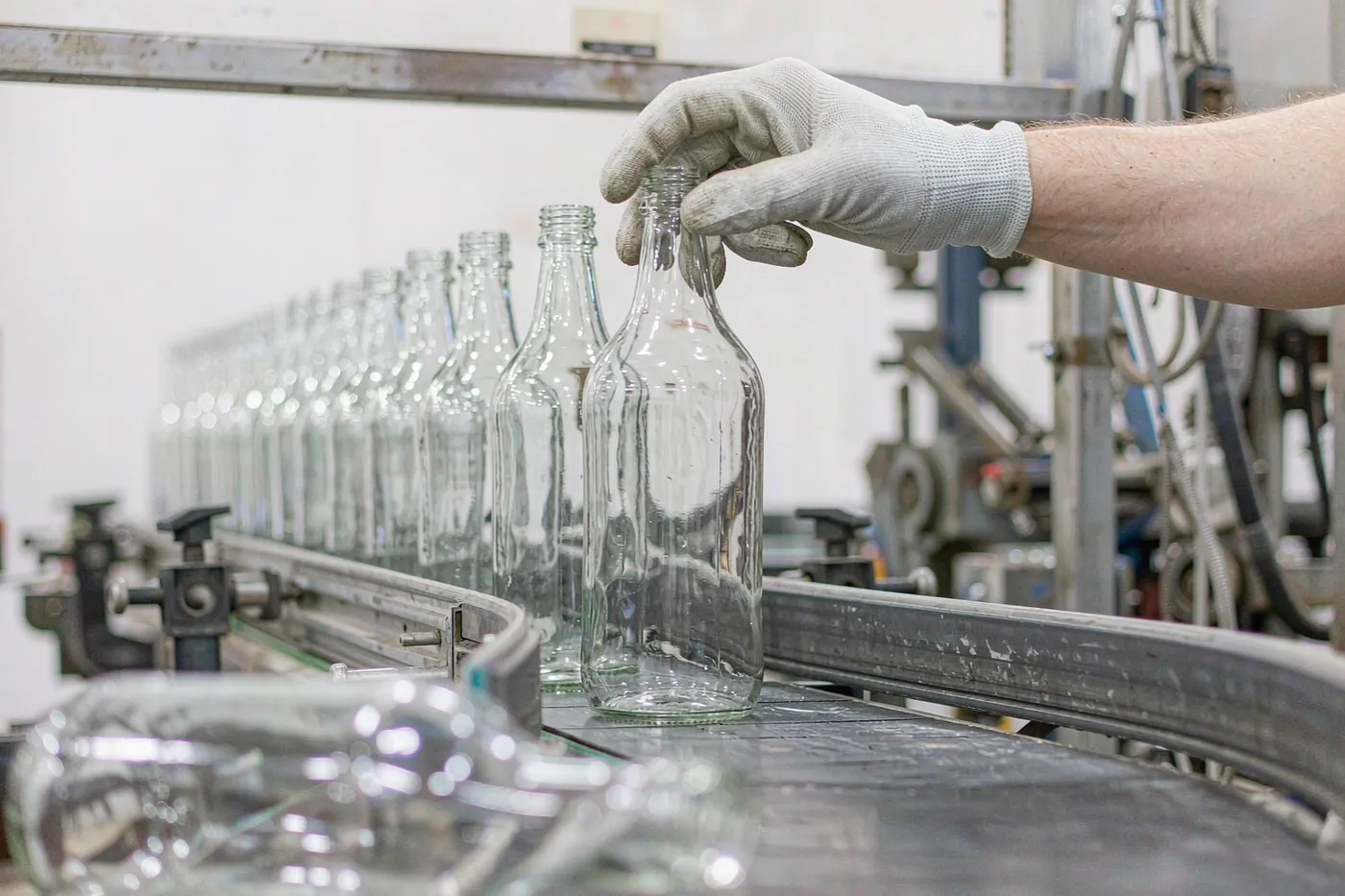
Choosing a glass supplier is mostly about matching three things: your volume, your tolerance for tooling spend, and how much engineering support you need. Get the match wrong and you either overpay per unit or end up with a bottle you cannot fill.
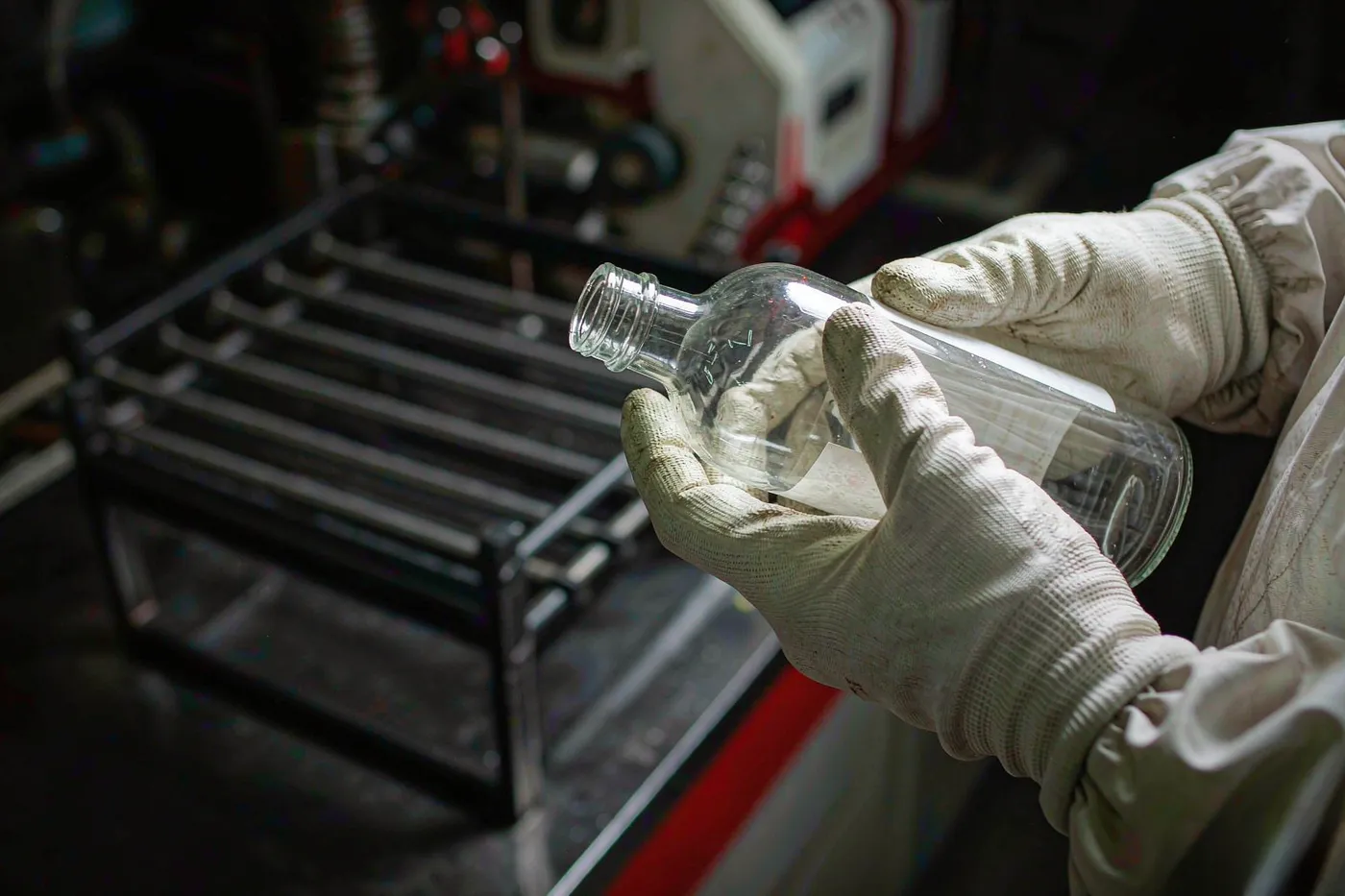
Factory versus trading company
- Glass factory — direct pricing, real engineering support for custom moulds, higher minimums, narrower shape range.
- Trading company — access to multiple factories, lower minimums, mixed-SKU consolidation, a margin on top, less direct engineering control.
If you are running one core SKU at real volume, go direct. If you are testing five shapes at low volume, a trader is usually the pragmatic route.
What to check before you commit
- Furnace and line count — indicates capacity and how flexible the production schedule is.
- Mould shop — in-house tooling shortens custom lead times considerably.
- Quality records — dimensional checks, thermal shock results, internal pressure results.
- Decoration capability — whether coating, printing and decals are in-house or subcontracted.
- Export experience — familiarity with your destination's packaging and documentation norms.
Questions worth asking directly
- What is the minimum order for this specific shape and colour?
- Is the mould in-house or outsourced?
- Which standards do you test to, and can I see recent reports?
- What is the sampling sequence and timeline?
- What is the breakage allowance written into the contract?
- Which Incoterms do you normally quote?
The sampling sequence
- Drawing approval, with finish geometry fixed.
- Physical sample, ideally from the production mould.
- Filled pilot run with your real closure and liquid.
- Transit test on packed cartons.
- Bulk production release.
Price drivers
Unit price moves with:
- Weight — the dominant driver, because it is the material.
- Colour — standard colours cost less than custom tints.
- Decoration passes — each pass adds time, handling and yield loss.
- Order quantity — set-up costs amortise over the run.
Red flags
- No written breakage allowance.
- Test reports without a named method or accredited laboratory.
- Unwilling to send a sample from the actual production mould.
- Quotes that change after deposit.
Certifications that actually signal something
Certificates are easy to collect and easy to misread. In glass packaging these are the ones that carry real information:
- ISO 9001 — a quality management baseline. Absence is a red flag; presence tells you very little on its own.
- FSSC 22000 or BRCGS Packaging Materials — a genuine food-safety management system for packaging. This is the meaningful one if you are selling into major retail or brand-owner supply chains.
- Sedex / SMETA — social compliance audit, increasingly requested by EU and UK buyers.
- ISO 14001 — environmental management, relevant if you have corporate reporting obligations.
What none of them tell you is whether the plant can hold your tolerances on your shape. That comes from sample testing, not from a certificate.
How to read a factory audit report
If you commission or receive an audit, three sections deserve the most attention:
- In-process inspection records — does the plant measure dimensions during the run, and how often? A plant that only does end-of-line sampling will ship you drift.
- Non-conformance handling — look for closed-loop corrective actions with dates, not just a list of findings.
- Traceability — can they link a shipped pallet back to a furnace campaign and a test report?
Ask to see the two most recent internal defect-rate summaries. Plants that track this will usually share it; plants that do not are telling you something.
Commercial terms worth negotiating
Beyond unit price, three levers matter more than buyers usually assume:
- Payment terms — tooling is typically paid up front or split across milestones; production is often against deposit and balance before shipment. The split is negotiable once you have a track record.
- Incoterms — FOB is the common default for sea freight. Confirm which port, because inland haulage to the port is often the hidden line item.
- Buffer stock agreements — for core SKUs, holding a defined quantity at the plant converts a six-week lead time into a one-week call-off. Often worth more than a small unit-price concession.
Red flags in first contact
- A quotation with no drawing revision number or tolerance statement.
- Reluctance to send samples off production steel rather than 3D prints.
- Certificates issued to a different legal entity than the one on the quotation.
- Indefinite answers on the furnace or production line your bottles would run on.
Sourcing channels compared
- Direct to a glass plant — best unit economics at volume, but you take on the engineering work yourself, and minimums are set by the furnace.
- Via a trading company — higher unit cost, lower minimums, and someone else handles coordination. The right choice while you are still testing shapes.
- Through a packaging agent or distributor — adds margin, but can be worth it for documentation, consolidation and local-market knowledge.
The usual path is to start with a trader, move the proven SKU direct, and keep the relationship available for small or awkward orders.
Managing the first three orders
The first three orders are where the relationship is actually established:
- Order one — small and fully tested. Accept a higher unit price in exchange for real quality data: dimensional checks, packing condition, breakage rate.
- Order two — confirm repeatability. Same specification, no changes. This is the test of whether order one was representative.
- Order three — scale up. Only then increase volume, negotiate terms and consider tooling.
Changing specification between orders one and two destroys the most valuable information you will get, which is whether the supplier can repeat a result.
Key takeaways
- Match three things: your volume, your tolerance for tooling spend, and how much engineering support you need.
- Go direct for one core SKU at real volume; use a trader while testing shapes at low volume.
- ISO 9001 is a baseline; FSSC 22000 or BRCGS Packaging is the meaningful food-safety signal.
- Ask for in-process inspection records, closed-loop corrective actions and batch traceability.
- Negotiate payment terms, Incoterms and buffer stock, not just unit price.
- Use the first three orders to establish repeatability before scaling.
Frequently Asked Questions
Should I buy from a glass factory or a trading company?
A factory gives better pricing and direct engineering on custom tooling, but usually demands higher minimums. A trading company consolidates several factories, which suits mixed SKUs and smaller runs, at a markup.
What is a typical MOQ for custom glass bottles?
It varies widely by plant, bottle complexity and whether you are tooling a new mould. Stock moulds commonly start around 1,000 to 3,000 pieces; custom tooling usually requires more, and the figure is normally quoted per colour per production run rather than as an annual commitment.
How long should I allow for supplier samples?
Plan in weeks rather than days for CAD, a physical sample, a production trial and transit. Sample freight is often slower than production freight, and a revision after the first sample restarts part of the cycle. Confirm each stage in writing, with dates, before paying a deposit.
How do I audit a glass factory remotely?
Ask for furnace and line details, quality-control records, mould drawings, food-contact declarations and recent test reports, then verify with a third-party inspection and a filled pilot run. Documents show intent; the pilot run shows what the plant actually produces on the day.
What payment terms are normal?
A deposit against the order with the balance against documents or before shipment is common for a new relationship, often 30/70. Terms usually improve with order history. Be cautious with a supplier who asks for full prepayment on a first order without references or an inspection.
Which Incoterm should I choose?
FOB is the common default for experienced importers, because it keeps control of freight and insurance. CIF suits buyers who would rather not manage shipping. Choose the term you can actually administer, not the one that looks cheapest on the quotation.
Related
- MOQ, Lead Time and Sampling Guide for Custom Glass Bottles
- Standard vs Custom Mould: Cost, Lead Time and Break-even for Spirits Bottles
- Food-Contact Compliance for Spirits Glass Bottles: FDA, EU and LFGB
Written by Eric Jiang, Glass Packaging Engineer, 12 years.