Food-Contact Compliance for Spirits Glass Bottles: FDA, EU and LFGB
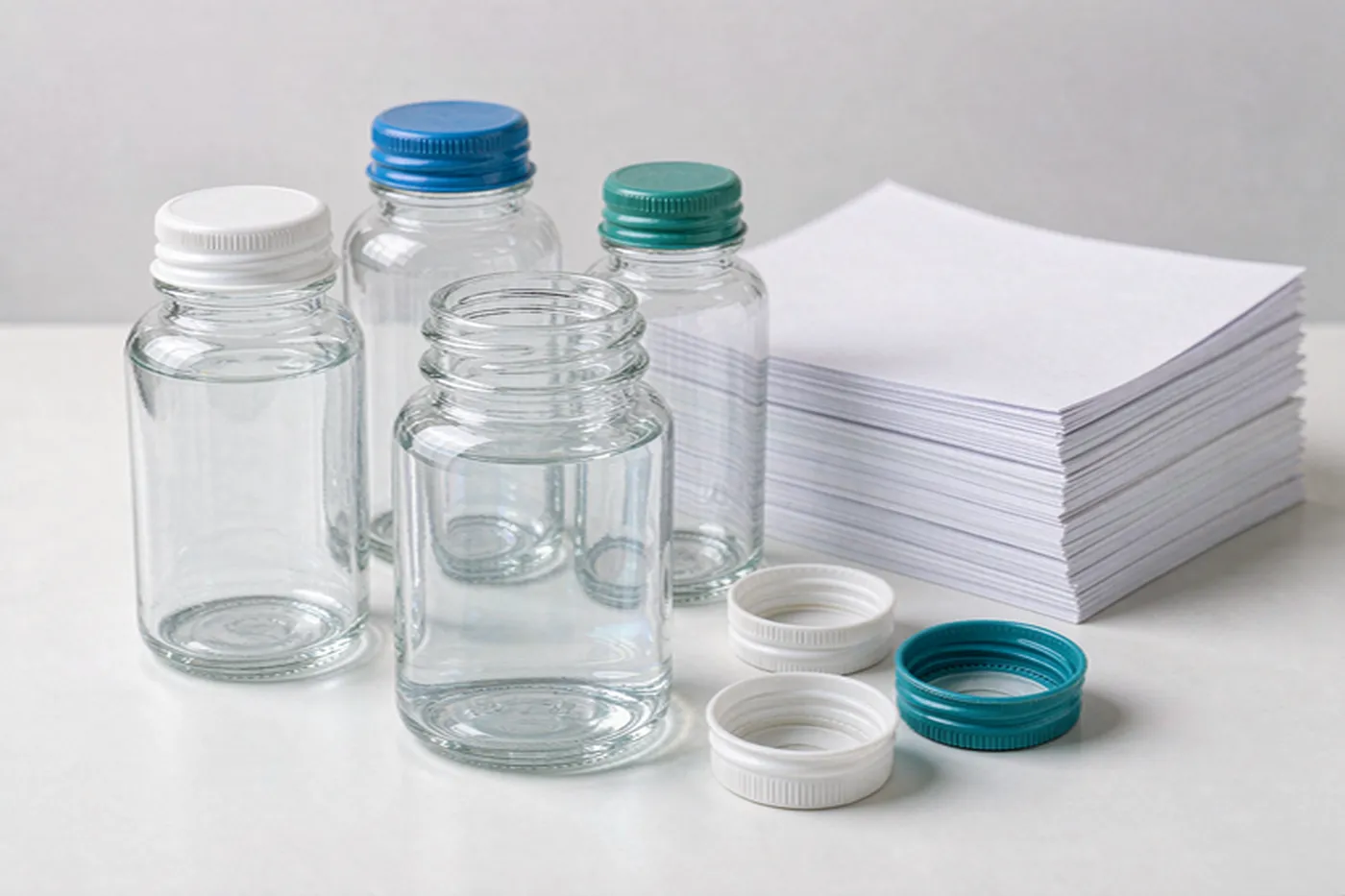
Glass is the easiest spirits packaging material to clear for food contact, but "it's glass so it's fine" is not a compliance position. The rules differ by market, and decorated bottles add extra materials that need their own documentation.

The three regimes buyers meet
- United States — FDA food-contact framework under Title 21 of the Code of Federal Regulations, indirect additives covered in parts 174 to 190.
- European Union — framework Regulation (EC) No 1935/2004, good manufacturing practice under Regulation (EC) No 2023/2006, and national rules where no EU measure exists.
- Germany — LFGB, the national code that many EU buyers request as a stricter benchmark.
The EU point most suppliers get wrong
Regulation (EU) No 10/2011 is the plastics measure. It does not apply to uncoated glass. Glass sits under the 1935/2004 framework, and because the EU has not adopted a specific measure for glass, member states may maintain national provisions.
The practical consequence: a supplier who sends you an "EU 10/2011 certificate" for a plain glass bottle has sent you the wrong document. What you need is a declaration of compliance under 1935/2004 plus the relevant national requirements for the destination market.
Where a bottle is coated, the coating may be a plastic material and 10/2011 can then apply to that layer specifically.
United States
- Glass is widely cited as the only packaging material the FDA regards as GRAS.
- Indirect food additives, including substances in closures and coatings, are covered in 21 CFR parts 174 to 190.
- Container size is separately regulated by TTB under 27 CFR 5.203.
Germany and LFGB
- LFGB is the German national framework for food-contact materials.
- It is frequently requested by EU buyers as evidence of a higher standard than the baseline.
- Decorated surfaces and any coating in contact with the product need supporting test reports.
What to ask your supplier for
- A declaration of compliance naming the material, intended food categories and conditions of use.
- Migration test reports for the glass and for any coating, ink or liner as separate materials.
- Heavy metal release reports where the bottle is decorated.
- Traceability records linking the report to the production batch.
The importer's position
Responsibility sits with the operator placing the goods on the market in the destination country. In practice that is the importer or brand owner, not the factory. Ask for documents before you ship, not after a customs hold.
A document checklist per shipment
Keep these four items together and most destination-market questions resolve quickly:
- Declaration of compliance naming the framework regulation and the national provisions relied on.
- Supporting test reports — heavy metals on decoration, migration on coatings and liners as applicable.
- Traceability records linking the shipment to a production campaign.
- The drawing and revision the above relate to.
If a document does not name a revision, it is not traceable to a specific bottle.
The three mistakes suppliers make
- Citing the plastics regulation for plain glass — EU 10/2011 is a plastics measure. It does not apply to uncoated glass, and a certificate citing it for a plain bottle indicates the document was not prepared for the product.
- Treating glass as automatically compliant because it is glass — the wall is low risk; the decoration, coating and liner are not.
- Assuming one market's documentation covers another — EU, US FDA and China GB systems have different structures and different declarations.
All three are avoidable with a checklist at the enquiry stage rather than the shipment stage.
Who is responsible for what
The obligations split cleanly:
- The glass plant supplies the declaration of compliance for the container and the decoration it applies.
- The closure supplier supplies the liner and closure declaration.
- The brand owner or importer is responsible for the finished packed product's compliance in the destination market, including label declarations.
No single supplier can issue a declaration covering the whole filled, closed, labelled pack. Expecting one is the most common structural error in this area.
Decoration and heavy metals
Decoration is the part of a spirits bottle that most often carries a compliance obligation the container itself does not:
- Rim and mouth-contact areas are the exposure pathway that matters, and the reason rim-area release testing exists for decorated ware.
- Ceramic and enamel systems are the usual source of heavy metal results.
- Coatings may fall under plastics food-contact rules where they contact the contents.
Screen decorated areas at sample approval, not at shipment. A failed result late in a programme is expensive; the same result early is a specification change.
Record keeping
- Keep the declaration of compliance, the supporting test reports and the drawing revision together, indexed by SKU.
- Date everything, and note which production batch each report relates to.
- Retain for at least the declared shelf life of the product plus a margin.
Good records turn a compliance question into a retrieval task. Poor records turn it into a programme.
Practical compliance sequence
- Fix the destination market first — the regime follows from it.
- Specify decoration and coating as materials, not just as finishes.
- Request declarations from every supplier in the chain, including the closure supplier.
- Commission testing on production samples, after decoration.
- Index everything by SKU and drawing revision.
Following this order means documentation is ready before it is needed, rather than assembled under time pressure.
Change control
Most compliance failures are change-control failures:
- A decoration supplier changes and the new formulation is never screened.
- A colour is reformulated and the old report is assumed to still apply.
- A drawing is revised and the documentation is not re-indexed to the new revision.
- A new market is added and the existing declaration is assumed to cover it.
Keep a simple rule: any change to material, supplier, specification or market triggers a documentation review. It is a cheap rule, and it prevents almost all of the problems in this area.
Key takeaways
- Glass is the easiest material to clear, but "it's glass so it's fine" is not a compliance position.
- EU 10/2011 is the plastics measure and does not cover uncoated glass; glass sits under 1935/2004 plus national provisions.
- Decoration, coating and liner each need their own documentation.
- No single supplier can declare the whole filled, closed, labelled pack compliant.
- Request a declaration covering the complete decorated article, not just the container.
- Keep records for at least the declared shelf life plus a margin.
Frequently Asked Questions
Does EU Regulation 10/2011 cover glass bottles?
No. Regulation (EU) No 10/2011 covers plastic materials and articles, including plastic coatings. Uncoated glass is not covered by it; glass sits under the framework Regulation (EC) No 1935/2004 plus national provisions, so a certificate citing 10/2011 for a plain glass bottle is the wrong document.
What law applies to glass food contact in the EU?
The framework Regulation (EC) No 1935/2004 sets the general safety requirements, and because there is no EU-specific measure for glass, individual member states may keep national rules. Germany uses LFGB, France uses DGCCRF rules.
Is glass FDA approved?
The glass industry widely cites glass as the only packaging material the FDA regards as generally recognized as safe (GRAS). Confirm the specific status for your product with your supplier rather than relying on the general claim.
What is LFGB?
LFGB is the German Food and Feed Code, the national framework for food-contact materials in Germany. It is often requested by EU buyers because it is stricter than the baseline.
What documents should I ask a glass supplier for?
A declaration of compliance covering the glass, plus separate documentation for any coating, ink or closure liner, and heavy metal release test reports for decorated surfaces. Ask for the drawing revision on each document, because a report that cannot be tied to a specification cannot be relied on.
Who is legally responsible for compliance?
Responsibility sits with the business operator placing the product on the market in the destination country, which is normally the importer or brand owner, not the overseas factory. The factory supplies declarations for what it makes; the operator carries the obligation for the finished, filled, labelled pack.
Related
- Migration Testing for Spirits Bottles: What Importers Should Ask For
- California Prop 65 and Heavy Metals in Glass Bottles and Decoration
- How to Choose a Glass Bottle Supplier for Export Spirits
Written by Eric Jiang, Glass Packaging Engineer, 12 years.