Standard vs Custom Mould: Cost, Lead Time and Break-even for Spirits Bottles
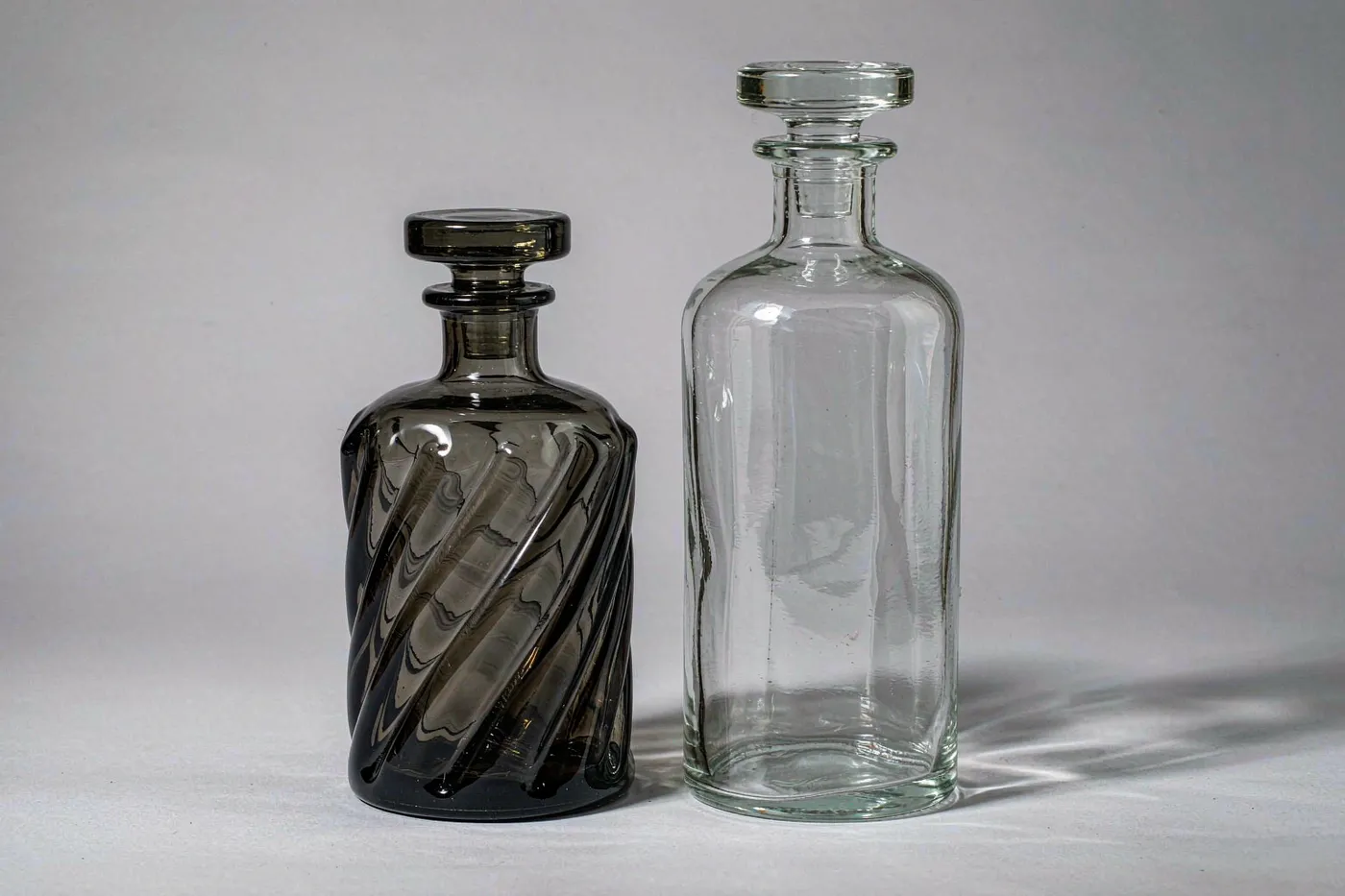
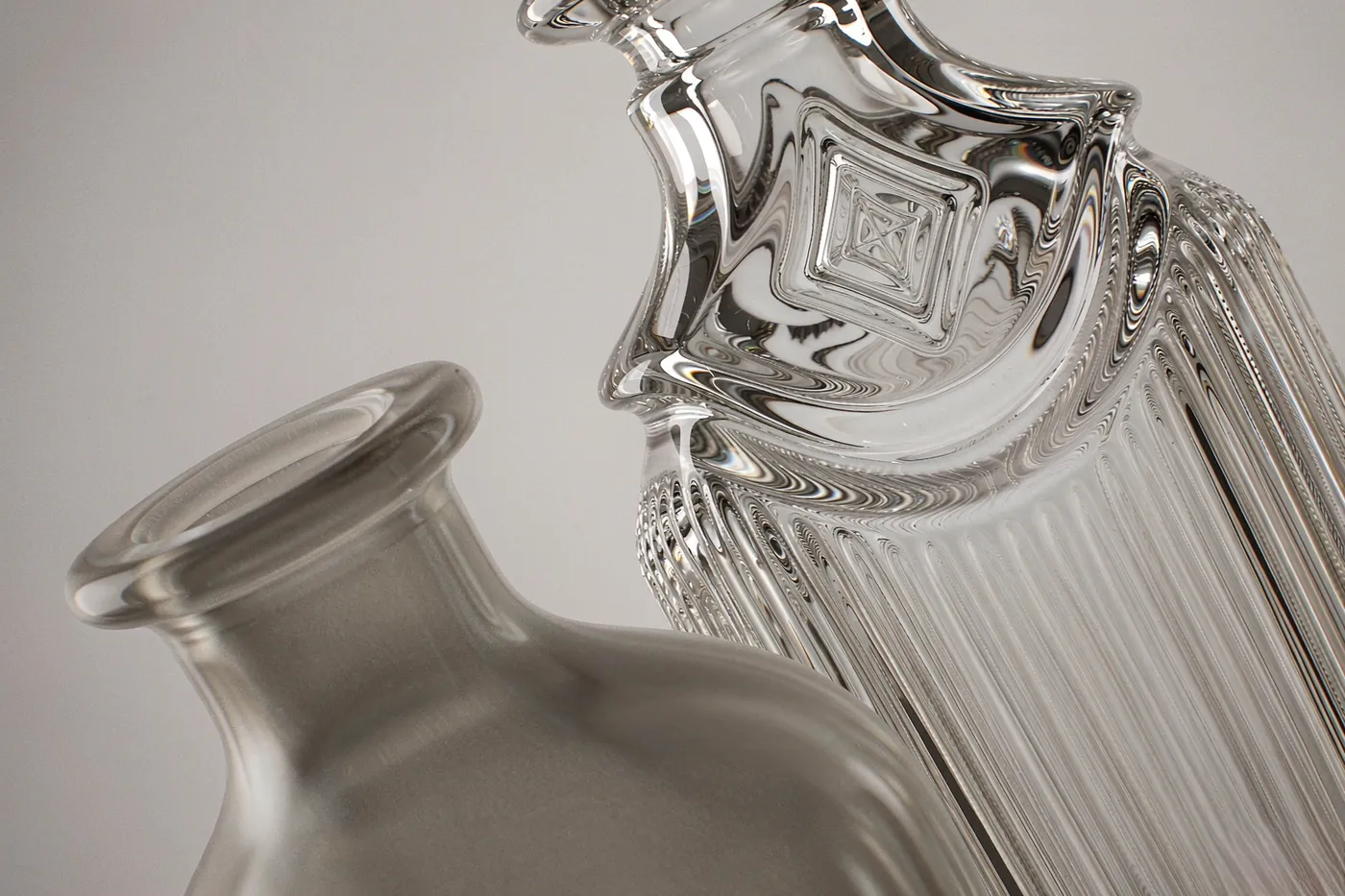
A stock mould is a shape the plant already owns and runs regularly; a custom mould is steel cut for your bottle. Stock moulds start in the region of 1,000 to 3,000 pieces and ship in weeks. Custom tooling costs more, takes longer, and only makes sense above a volume where the amortisation per bottle stops hurting.
Where the money actually goes
- Tooling — a one-off charge for custom steel, amortised over lifetime volume.
- Set-up — screens, plates and changeover time, charged per production run.
- Material — glass priced by mass, which is why weight dominates unit cost.
- Decoration — each pass adds time, handling and yield loss.
Tooling is the only fixed cost in that list. Everything else scales with units, which is why the break-even is purely a volume question.
Break-even logic
The comparison is straightforward:
- Custom route — tooling charge, plus a higher per-unit price driven by the higher minimum.
- Stock route — no tooling, lower per-unit price, plus decoration cost per unit.
Divide tooling by the annual volume you realistically expect, not the optimistic number. If that figure is a meaningful share of your per-bottle margin, the stock route with strong decoration usually wins the first two years.
Lead time structure
Plan the timeline backwards from the launch date:
- Design and CAD, then a physical sample for approval.
- Mould manufacture for the custom route.
- Production trial on the real mould.
- Bulk production, then packing and booking.
- Ocean transit, then customs clearance and inland delivery.
Get each stage in writing before you pay a deposit. The two stages most often underestimated are mould manufacture and transit, not production.
Tooling ownership and exclusivity
Ask three questions before signing:
- Who owns the steel? Normally the buyer does, once paid for, but it is usually stored at the plant.
- Is the shape exclusive to you? Some stock moulds are shared across brands, with only decoration differing.
- What happens if you move production? Tooling transfer is possible but takes time and needs the plant's cooperation.
Decoration as the alternative to tooling
If the budget will not carry tooling, decoration does most of the work:
- Full-body spray coating changes the bottle's colour completely.
- Frosting or acid etching changes the surface and the way light reads.
- Screen printing and decals carry fine detail that stock shapes lack.
- A distinctive closure changes the top of the bottle, which is what shoppers see first on a shelf.
Risk checklist before tooling
- Capacity confirmed against the destination's authorised list.
- Weight target and tolerance agreed, and validated for capping load.
- Finish code fixed, with the T dimension tolerance written down.
- Colour reference agreed, with a batch tolerance.
- Tooling ownership, exclusivity and storage terms in writing.
- Sampling cost and whether it credits against bulk production.
When a custom mould is the wrong answer
Custom tooling is right when the shape itself is the brand asset and the volume supports it. It is the wrong answer more often than buyers expect:
- Under roughly 20,000 to 30,000 units a year, amortisation usually dominates the unit cost, and a stock bottle with strong decoration reads better on shelf per dollar spent.
- When the launch date is fixed and close, because tooling and sample approval are the two longest stages in the schedule.
- When the formula or size may change, since a mould is cut to one capacity and one finish.
- When the differentiation can come from decoration instead — frosting, etching, embossing and print carry a surprising amount of brand identity at a fraction of the cost.
A useful test: if you covered the label, would a shopper still recognise the bottle? If not, buy the stock mould and spend the difference on decoration.
What tooling actually includes
A tooling charge is not one piece of steel. A typical custom programme includes:
- Mould set — the cavity and the number of sections needed for the shape.
- Plunger and neck ring — separate wear parts, and usually quoted separately.
- Take-out and handling — inserts and tooling for the hot end.
- Sample and approval runs — the cost of the first shots off the new steel.
Ask which of these are included and which are extras. Two quotations can differ mainly in what is excluded.
Second-source and contingency planning
Single-source tooling is a real business risk. Mitigations worth building in from the start:
- Own the drawing, not just the bottle. If you need to move production, the drawing is what travels.
- Confirm tooling ownership in writing — whether you own the steel, the plant owns it, or it is held exclusively for you.
- Keep a second source qualified for at least one core SKU, even at a small volume.
- Hold buffer stock through your peak season, because glass lead times do not compress when you need them to.
None of these add much cost when planned in. All of them are expensive to arrange after a supply failure.
Sampling and approval gates
Treat tooling as a sequence of gates, each with something to approve and something that can still be changed cheaply:
- Drawing release — after this, dimensional changes cost money.
- Mould design sign-off — after this, shape changes cost serious money.
- First articles off production steel — the first point at which the bottle behaves like the real thing.
- Decorated approval sample — the last gate before mass production.
The expensive mistakes all happen when a gate is treated as a formality. Gate 2 in particular deserves real engineering review, because it is the last point at which the shape is still cheap to change.
Tooling life and refurbishment
- Cavities are wear parts. They run hot, under repeated thermal and mechanical load, and they lose definition over time.
- Refurbishment is a recurring cost, not a contingency. Budget for it on any long-running programme.
- Keep a first-article reference from the original run so wear can be measured against something.
If you own the tooling, confirm where it is stored, what maintenance it receives, and what happens to it at the end of the programme.
A decision summary
- Choose stock when volume is low or uncertain, the launch date is close, or the differentiation can come from decoration.
- Choose custom when the silhouette is the brand asset and annual volume supports amortisation.
- In both cases, fix the closure before the drawing is released.
The decision is rarely close once volume and timing are written down. Most regret comes from ordering tooling before either was clear.
Key takeaways
- Stock moulds start lower and ship in weeks; custom tooling is a fixed cost that only pays back at volume.
- Tooling is the only fixed cost - everything else scales with units, which is why break-even is purely a volume question.
- Mould manufacture and transit are the stages most often underestimated; production rarely is.
- Decoration is usually the better route to distinctiveness in the first two years.
- Fix the closure before the drawing is released, because the finish is cut into the mould.
- Own the drawing, confirm tooling ownership in writing, and qualify a second source.
Frequently Asked Questions
How much does a custom glass bottle mould cost?
There is no fixed figure; it depends on cavity count, bottle complexity and the plant. Treat tooling as a fixed cost to amortise, and get it quoted against your specific drawing rather than estimating.
When is a custom mould worth it?
When the shape itself is part of the brand, and annual volume is high enough that tooling amortisation per bottle is small against the margin gained from differentiation. Below that volume, a stock mould with a strong decoration package usually delivers more shelf impact per unit of money spent.
What is the typical minimum order for stock bottles?
Stock moulds commonly start in the region of 1,000 to 3,000 pieces, and the minimum is normally quoted per colour per run rather than per year. Custom tooling usually carries a higher minimum, because the plant has to amortise a production run as well as the mould itself.
How long does sampling take?
Plan in weeks rather than days. CAD and a physical sample come first, then a full production trial on the real mould before you commit. Mould manufacture is the longest single stage and cannot be compressed much, so a schedule that assumes a fortnight for a custom shape is optimistic.
Can I change the mould later?
Only within limits, and at a cost. Cutting or altering steel is expensive and slow, and a change to capacity, finish or weight usually invalidates the samples you already approved. Lock those three decisions before tooling starts, and treat decoration as the adjustable layer afterwards.
Does a stock mould mean my bottle looks generic?
Not necessarily. Decoration carries much of the differentiation: full-body coating, frosting, screen printing, an embossed label area and a distinctive closure all change the shelf impression. Plenty of premium brands run a stock mould with a heavy decoration package rather than paying for tooling.
Related
- How to Read a Glass Liquor Bottle Spec Sheet (With a Worked Example)
- Liquor Glass Bottle Buyer's Guide 2026: Capacity, Glass Type, MOQ and Cost
- MOQ, Lead Time and Sampling Guide for Custom Glass Bottles
Written by Liang Wei, Glass Packaging Engineer.