Liquor Glass Bottle Buyer's Guide 2026: Capacity, Glass Type, MOQ and Cost
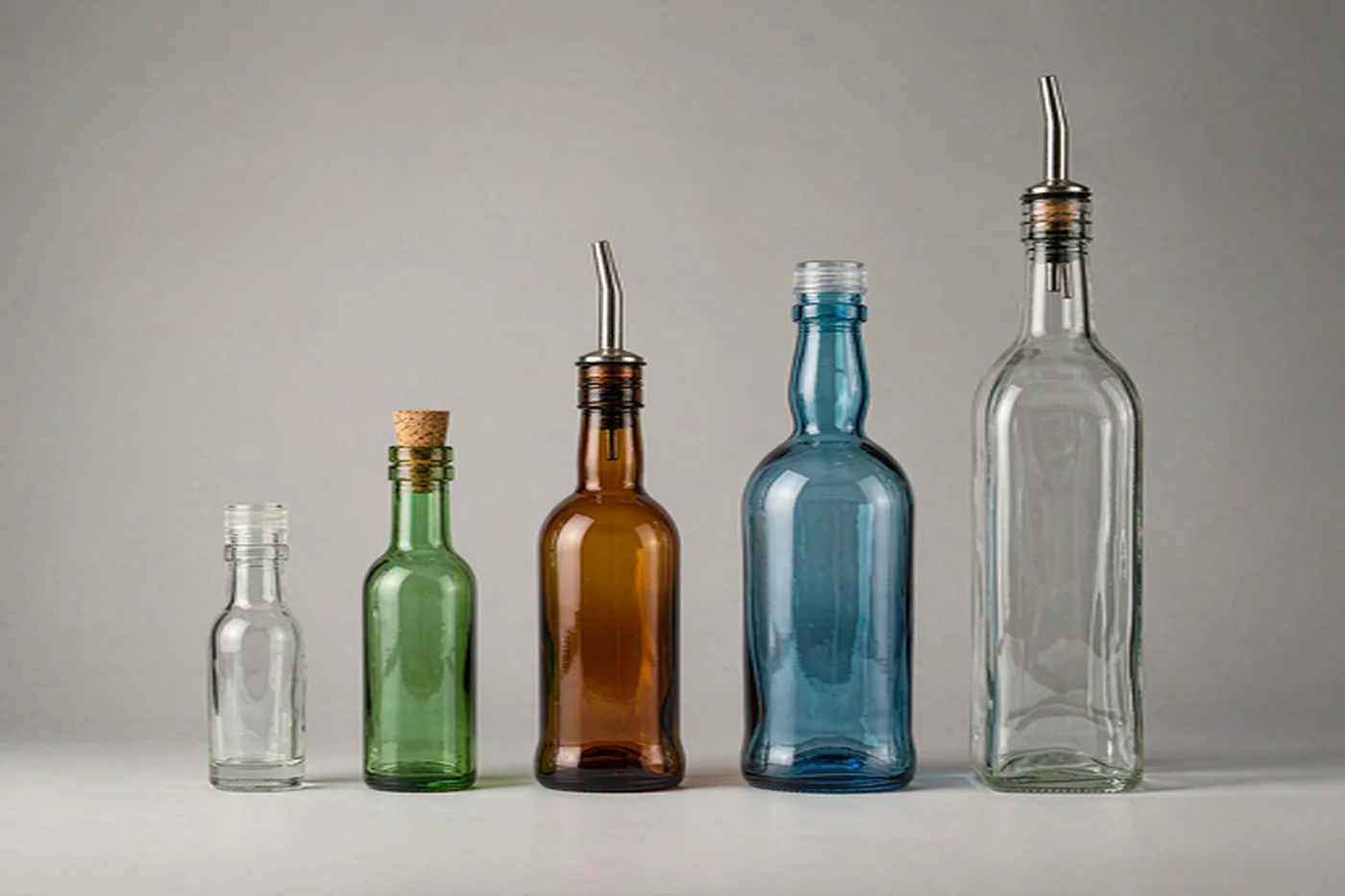
Sourcing spirits bottles comes down to four decisions, in this order: capacity, glass colour, closure system, and decoration. Get the first three wrong and the bottle cannot be legally sold or filled; get the fourth wrong and it simply will not sell.
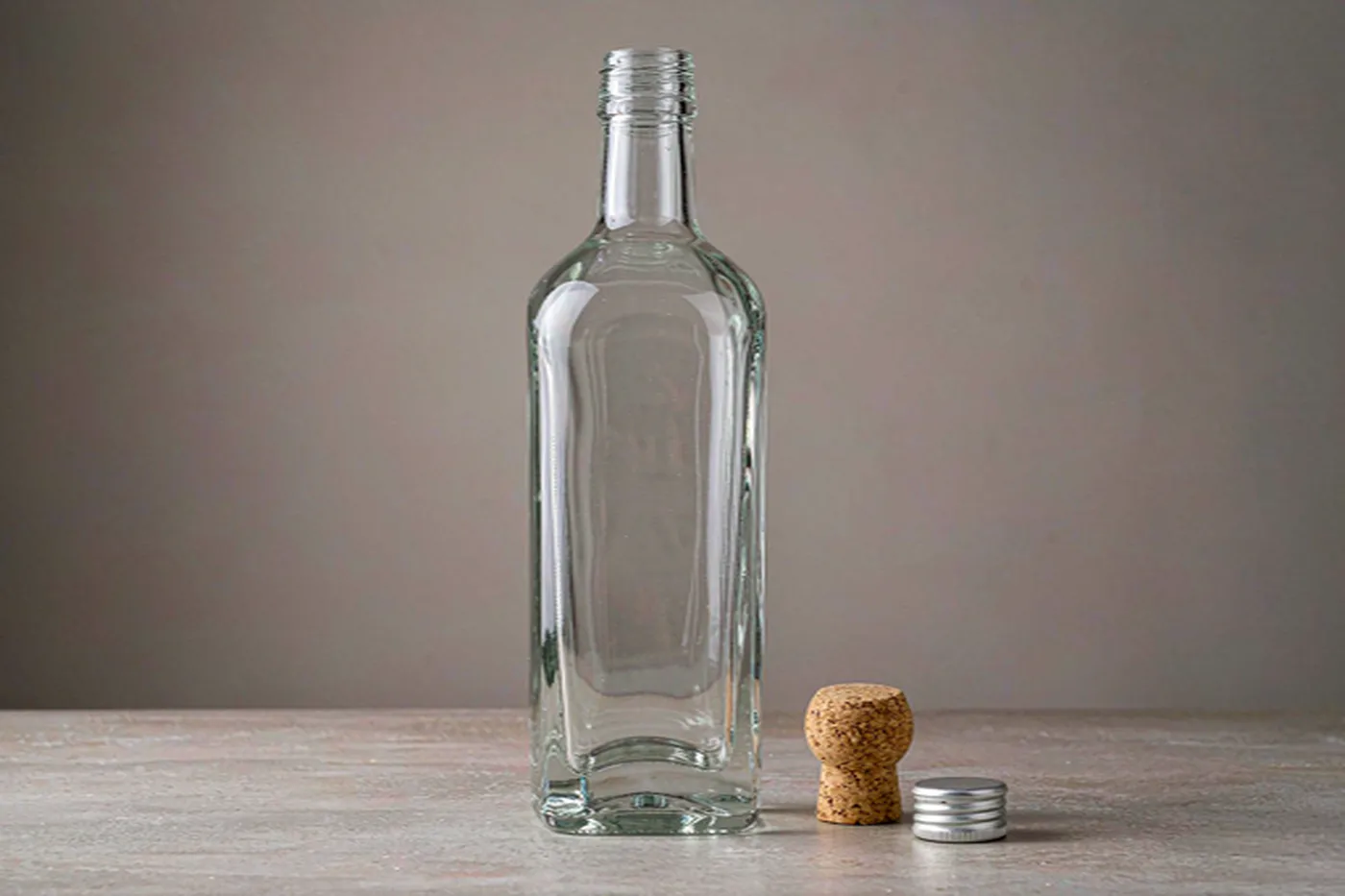
1. Capacity is a legal question, not a design one
The United States authorises a fixed list of metric standards of fill for distilled spirits under 27 CFR 5.203(a)(1): 1.8 L, 1.75 L, 1.00 L, 900 mL, 750 mL, 720 mL, 700 mL, 375 mL, 200 mL, 100 mL and 50 mL.
The EU does the same through Directive 2007/45/EC, which permits only nine nominal quantities for spirit drinks between 100 ml and 2000 ml: 100, 200, 350, 500, 700, 1000, 1500, 1750 and 2000 ml.
Practical translation:
- US-bound — 750 ml is the retail default, 50 ml for sampling.
- EU or UK-bound — 700 ml is the standard, 1 L for travel retail.
- Discovery and gifting — 200 ml and 350 ml keep the entry price low.
2. Glass colour is a protection decision
- Flint (clear) — shows the liquid, protects nothing. Use when clarity or colour is the selling point.
- Amber — absorbs most wavelengths below roughly 450 nanometres. The safe choice for light-sensitive formulas.
- Green — partial protection, traditional look.
- Blue and cobalt — better than flint, less protective than amber.
- Coated — decorative colour over any base, with reduced abrasion resistance.
If the product carries natural colourants or botanical extracts and will sit under retail lighting, choose amber.
3. Closure systems
- GPI continuous thread — coded diameter plus thread style, e.g. 28-400. Both numbers must match the bottle.
- ROPP aluminium — rolled onto the thread at the filler; standard for vodka, gin and value tiers.
- Bar-top and cork — a shank compressed in the bore; the premium ritual closure.
- Crown — mostly for ready-to-drink and small formats.
Specify the closure at the drawing stage. Choosing one from a catalogue afterwards is the most common cause of a delayed launch.
4. Decoration
- Embossing or debossing — in the glass, permanent, no added unit cost after tooling.
- Acid etching and frosting — a matte surface, premium touch.
- Spray or ceramic coating — full-body colour, including gradients.
- Screen printing and decals — fine detail and multi-colour artwork.
Typical order economics
Treat these as planning shapes rather than quotes, and confirm each against your own volume:
- Stock mould minimum — commonly 1,000 to 3,000 pieces.
- Custom tooling — higher minimum, plus a one-off tooling charge.
- Tooling amortisation — divide the tooling charge by realistic annual volume.
- Unit price drivers — weight, colour, decoration passes and order quantity.
Compliance essentials
- Uncoated glass is not covered by the EU's plastics regulation (EU) No 10/2011; it sits under the framework Regulation (EC) No 1935/2004 plus national rules in the destination market.
- Coatings, inks and closure liners are separate food-contact materials and each needs its own documentation.
- Ask for a declaration of compliance and, for decorated bottles, heavy metal release test reports.
A practical sequence
- Fix capacity from the destination's authorised list.
- Choose colour from the product's light sensitivity.
- Fix the neck finish and closure together, on one drawing.
- Choose decoration to carry brand differentiation.
- Approve a physical sample, then run a filled pilot before bulk.
What to send with your first enquiry
A vague enquiry gets a vague quotation. Four attachments close most of the gap before the first call:
- Target capacity and market — the single most important line, because it fixes the authorised size list.
- A reference image or sketch — front and side if possible, plus the rough height and base diameter you have in mind.
- Annual volume and first-order quantity — the plant prices against mould utilisation, so this number changes the quote more than any other.
- Closure and decoration intent — even a rough "bar top, one-colour print" is enough for a budget figure.
If you have a filling line already, add the neck finish it is set up for. Retrofitting a line to a different finish is expensive and avoidable.
Reading a quotation
Glass quotations look simple and are not. Three items are worth checking line by line:
- Tooling — one-off, and the single fixed cost in the whole project. Confirm whether the quote assumes stock moulds or new steel.
- Unit price and its validity — glass pricing tracks energy and soda ash, so quotations usually carry an expiry. Ask for the validity window in writing.
- Packing and pallet configuration — stated units per carton and cartons per pallet. This is what your freight forwarder will actually need.
Two things are commonly missing and should be requested: the drawing revision number the quote is based on, and the MOQ per colour, not just per mould.
Sample and approval workflow
The sequence that works:
- Drawing approval — you sign off the dimensional drawing first. Everything downstream depends on it.
- Prototype or 3D print — cheap, fast, and enough to settle shape and shelf presence.
- Mould samples from production steel — the first article that behaves like the real bottle. Test filling, capping, and decoration on these.
- Decorated approval sample — the last check before mass production.
Do not skip step 3. Drawing approval is not the same as a bottle coming off real steel, and the difference is where most decoration surprises appear.
The four delays that are actually avoidable
- Closure chosen last — the finish is already cut, and now the chosen cap does not fit. Specify the closure at drawing stage.
- Colour approved on screen — glass colour shifts with wall thickness and light source. Approve on a physical sample under retail lighting.
- Decoration not tested on the real surface — adhesion varies with coating and frosting. Always run a cross-hatch and wash test on production samples.
- Compliance left to the end — heavy metal release testing on decorated surfaces and destination labelling both take time. Start them when you approve samples.
Budgeting the first run
Four cost blocks, and buyers routinely budget only the first:
- Unit price — the visible number.
- Tooling — one-off, and the reason a low unit price can still be the expensive option.
- Samples and testing — prototypes, decorated approval samples and compliance testing.
- Freight and duty — driven by glass weight and pack density as much as by distance.
Model all four before comparing quotations. A unit-price comparison alone will usually point at the wrong supplier for a first programme.
What to verify at goods-in
Before filling, check four things on a sample from the delivered lot:
- Dimensions against the drawing — height, body diameter and finish T.
- Finish condition — no chips on the sealing surface, and the bore within tolerance.
- Carton condition and count — damaged cartons and short counts are the most common shipment defects.
- Decoration adhesion on production samples, using the same test approved at sample stage.
Record results against the drawing revision. It is the difference between a quality system and an argument.
Key takeaways
- Capacity is a legal question first: pick from the authorised size list for your destination market before designing anything.
- Glass colour is a product-protection decision, not a styling one; choose amber where the liquid is light-sensitive.
- Specify the closure at drawing stage, because the neck finish is cut into the mould and cannot be changed later.
- Decoration differentiates but rarely justifies tooling on its own at low volume.
- Budget all four cost blocks - unit price, tooling, samples and testing, freight - before comparing quotations.
- Verify dimensions, finish condition and decoration adhesion on a sample from every delivered lot.
Frequently Asked Questions
What should I decide first when sourcing spirits bottles?
Capacity, because it is legally constrained. Both the US (27 CFR 5.203) and the EU (Directive 2007/45/EC) permit only a fixed list of fill sizes, so volume narrows your options before design does.
What is the usual minimum order quantity?
Stock moulds commonly start around 1,000 to 3,000 pieces. Custom tooling generally requires more, because the plant must amortise a production run, and the minimum is usually quoted per colour per run rather than per year. Ask for it in writing alongside the unit price.
How long does a first order take?
Plan in weeks from drawing approval to delivery: sampling, mould work if custom, production, packing, ocean transit, then clearance and inland delivery. Mould manufacture and transit are the two stages most often underestimated, and both are difficult to compress once started.
Do I need compliance documents for glass bottles?
Yes. Importers should obtain a food-contact declaration of compliance for the glass, and where the bottle is decorated, documentation for the coating or ink as a separate contact material. Heavy metal release data on decorated surfaces and a liner declaration complete the set that buyers usually request.
Is 700ml or 750ml better for export?
Match the destination. 700 ml is the EU and UK spirits standard, while 750 ml is the US standard and remains the global wine size. Many brands run both, because a single bottle cannot satisfy both markets, and capacity is fixed by the mould rather than by the fill level.
Related
- Liquor Bottle Sizes and Capacity Guide: 50ml to 2000ml Compared
- Glass Bottle Colour and UV Protection: Flint, Amber, Green and Coated
- How to Read a Glass Liquor Bottle Spec Sheet (With a Worked Example)
- Standard vs Custom Mould: Cost, Lead Time and Break-even for Spirits Bottles
Written by Eric Jiang, Glass Packaging Engineer, 12 years.