Cork vs Screw Cap for Spirits Bottles: Sealing, Shelf Life and Cost
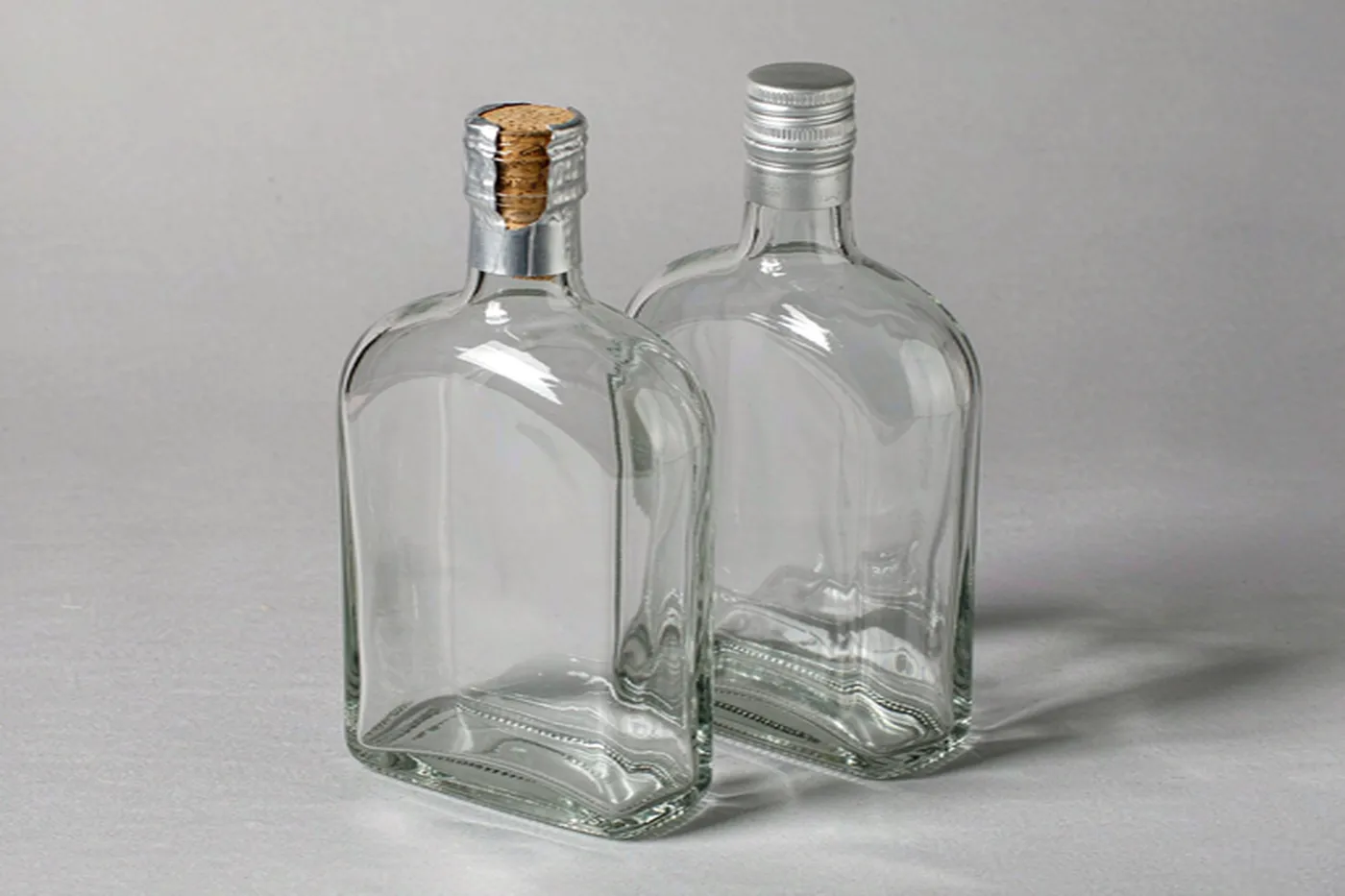
The cork-versus-screw-cap debate is mostly a branding decision wearing a technical costume. Both seal a spirits bottle adequately when specified properly; they differ in cost, ritual and what happens after twelve months in a warm warehouse.
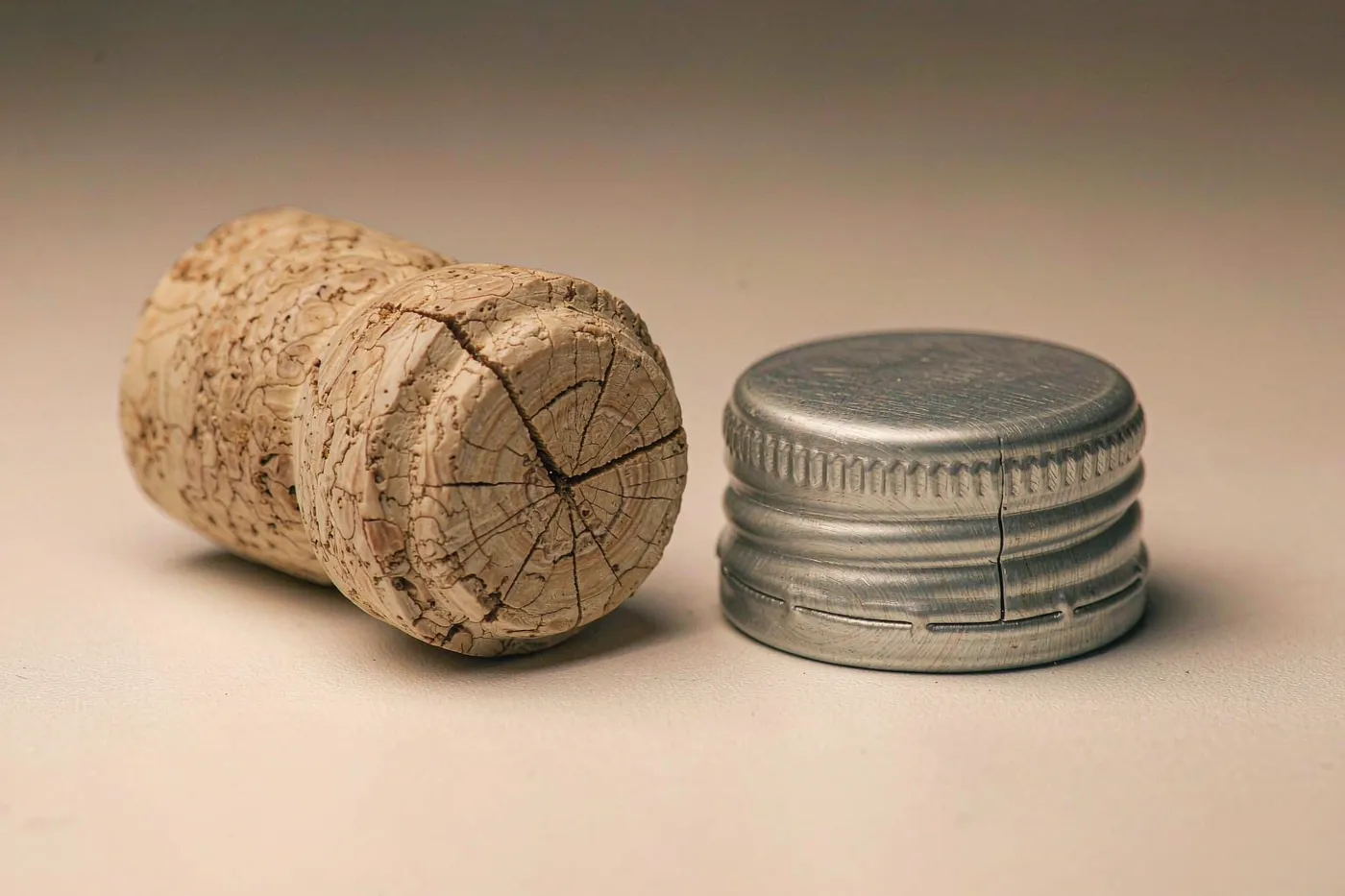
What actually goes wrong
Two failure modes account for nearly all closure problems:
- Evaporation — the seal relaxes and the fill level drops, which reads as quality loss to the buyer.
- Flavour scalping or taint — the closure material absorbs aroma compounds or contributes its own, the classic case being cork taint from TCA.
Neither is caused by the closure family. Both are caused by a mismatch between closure, liner and product.
ROPP aluminium
- Cost — lowest of the common options.
- Sealing — rolled onto the glass thread at the filler; the most consistent seal in the category.
- Tamper evidence — an integral break band, the strongest option for retail.
- Brand signal — functional and mainstream. A thin ROPP cap on a premium aged spirit reads as a value product.
Screw caps
- Cost — comparable to ROPP for plastic, higher for metal.
- Sealing — depends entirely on the liner and the retained torque.
- Advantage — re-closable and familiar, and a 28 mm screw neck accepts the widest range of pourers.
Natural cork
- Cost — premium, and price varies by grade.
- Ritual — the strongest opening ceremony of any closure.
- Risk — TCA. Industry estimates commonly put incidence in the low single-digit percent range.
- Variability — oxygen ingress varies between individual corks.
Colmated and agglomerated cork
- Cost — lower than top-grade natural cork.
- Risk — reduced TCA risk when steam-washed or peroxide-treated.
- Consistency — more uniform than natural cork.
Bar-top stoppers
- Cost — the premium end, particularly with zamac or wooden heads.
- Sealing — a shank compressed in the bore; performance depends on shank material and compression fit.
- Brand signal — the closure becomes a design element rather than a functional part.
Choosing by price tier
- Value and high-turn: ROPP aluminium or plastic screw cap.
- Mid-tier: screw cap with a better liner, or colmated cork.
- Premium aged spirits: bar-top with a wooden or zamac head.
- Gifting and limited edition: bar-top or a bespoke closure.
What to confirm with your supplier
- Finish code and T dimension tolerance.
- Liner material suited to your ABV.
- Removal torque after 24 hours, and a retention curve at 1, 30 and 90 days.
- Tamper-band behaviour at the intended opening torque.
- Compatibility with your capping head.
Oxygen and closure choice
The functional difference comes down to oxygen transmission:
- Screw cap and ROPP with a suitable liner give a near-hermetic seal and a predictable, low oxygen ingress rate.
- Natural cork allows more oxygen through, and varies more between individual stoppers.
- Synthetic and agglomerated corks sit in between, generally with better consistency than natural cork and higher ingress than a screw cap.
For a clear, light-stable spirit with a short expected shelf life, the difference rarely matters. For a product intended to develop in bottle, or with oxidisable botanicals, it does.
Taint and consistency
The two practical risks differ by closure type:
- Natural cork carries a risk of taint compounds, and more unit-to-unit variation. This is why many producers moved away from it for fresh, unoaked spirits.
- Screw cap and ROPP carry almost no taint risk, but depend entirely on correct torque and liner specification. A well-specified ROPP closure is the more consistent option.
If consistency across a large shipment is the priority, screw cap or ROPP is the safer specification.
Cost and line considerations
- ROPP requires a roll-on capping head; most high-speed lines are already set up for it.
- Screw caps need a pre-threaded finish and a torque-controlled capper.
- Natural cork needs a corker and usually a capsule or sleeve afterwards, which adds a station.
If you are using a contract bottler, confirm which closures their line is set up for before you choose. Retrofitting is expensive.
What to confirm with your supplier
- The finish code and bore dimension the closure is validated against.
- Liner material and its food contact declaration.
- Torque specification for screw caps, and the test method.
- Tamper evidence requirements for the destination market.
Taint and incoming quality control
- Natural cork carries a taint risk that no visual inspection can fully remove. Where it is specified, plan for sensory screening on incoming lots.
- Synthetic and agglomerated options remove most of that risk at some cost in premium perception.
- Screw and ROPP have essentially no taint pathway, but depend entirely on liner specification and application control.
Incoming checks worth running on any closure: dimensional check against the finish drawing, removal torque, liner integrity and a visual defect sample.
Closure cost at volume
- Marginal cost falls with volume for most closure types, though the curve is much flatter than for glass.
- Setup and tooling concentrate in decoration — printing, embossing and special finishes on caps carry their own setup charges.
- A second closure supplier is cheap insurance and worth qualifying on at least one SKU.
Closure cost per unit is small relative to glass, but closure failure cost per unit is not. Spend on consistency rather than on the cheapest option.
Shelf-life expectations by closure
- ROPP and screw caps with a suitable liner give the most predictable long-term seal, and are the default where shelf life is measured in years.
- Synthetic and agglomerated stoppers perform well over medium shelf lives, with better consistency than natural cork.
- Natural cork varies most between units, which is why it is usually paired with a shorter declared shelf life or additional screening.
- Bar-top stoppers are presentation-led and depend heavily on bore tolerance and shank condition.
Match the closure to the declared shelf life rather than to the price tier alone. The two usually align, but not always.
Key takeaways
- ROPP and screw caps give the most predictable seal; natural cork varies most between units.
- Oxygen transmission is the functional difference, and it matters most for oxidisable botanicals.
- There is no such thing as a Prop 65 certificate - only test evidence or an exposure assessment.
- Confirm the finish code and bore the closure is validated against, in writing.
- Line speed and existing capping equipment should be confirmed before choosing.
- Closure failure cost per unit far exceeds closure cost per unit.
Frequently Asked Questions
Does cork let spirits breathe?
Not meaningfully in a sealed bottle. Cork allows very slow oxygen transfer, but for spirits the dominant shelf-life risks are evaporation from a poor seal and flavour change from the closure material, not controlled micro-oxygenation.
What is TCA and should I worry?
TCA is the compound responsible for cork taint. Industry estimates for natural cork TCA incidence are commonly quoted in the low single-digit percent range. Colmated and agglomerated corks, and synthetic shanks, reduce but do not fully remove the risk.
Which closure is cheapest?
ROPP aluminium and standard plastic screw caps are the cheapest, and the gap to the premium options is large. Natural cork and zamac-headed bar-tops sit at the top end and can cost several times more per unit, which matters little on a premium bottle and a great deal on a value line.
Which closure leaks least?
Properly applied ROPP closures with alcohol-resistant liners generally give the most consistent seal, because the aluminium is rolled onto the glass thread and the liner is compressed against the bore. Bar-top performance depends heavily on shank material and compression fit, so it varies more between suppliers.
Does closure choice affect shelf life?
Yes. Evaporation and flavour scalping are the two mechanisms, and both depend on the liner material and on how much compression or torque is retained over time. A closure that seals on day one but relaxes within months will still lose fill and aroma over a normal retail shelf life.
Related
- Glass Bottle Neck Finish and Closure Guide for Spirits Brands
- Closure Liners and Seal Integrity: Stopping Leaks and Evaporation
- Whisky Bottle Shapes and Sizes: A Buyer's Guide
Written by Eric Jiang, Glass Packaging Engineer, 12 years.