Whisky Bottle Shapes and Sizes: A Buyer's Guide
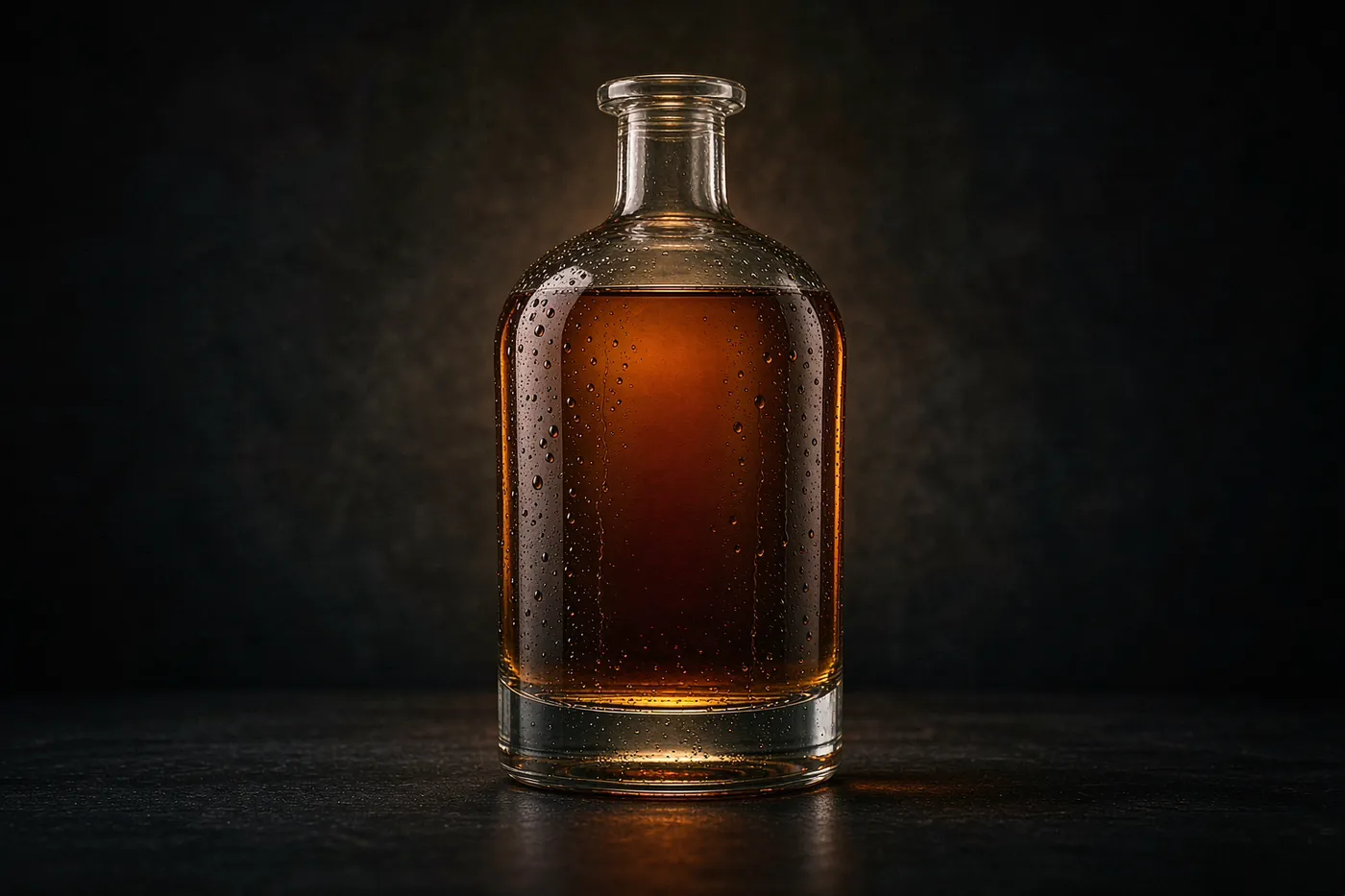
Whisky bottles carry two jobs at once: protect a colour-sensitive liquid and signal age and quality at a glance. That is why the category has settled into a small number of recognisable silhouettes, each with its own cost and filling implications.
The common silhouettes
- Round shouldered — the classic Scotch profile; soft shoulder, short neck, wide label panel.
- High shouldered — a sharper, more upright shoulder; common for bourbon and rye.
- Square and rectangular — flat panels give large label areas and efficient pallet packing.
- Decanter and flagon — sculptural, often with a stopper; chosen for gifting and limited editions.
- Flask — flat, pocket-shaped; heritage cues and on-the-go positioning.
Base design drives both cost and perception
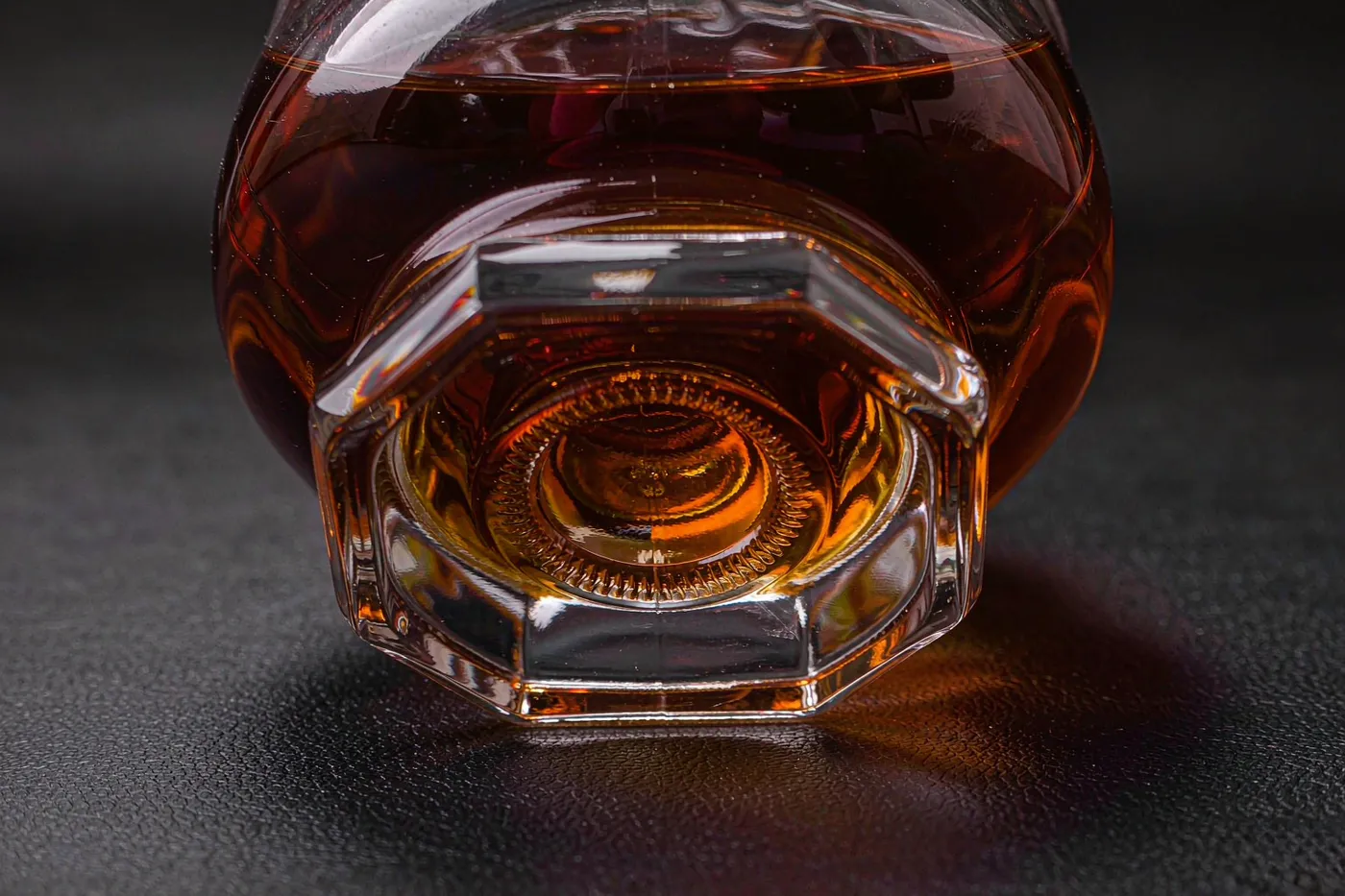
- Heavy base (often called a "punt" or thick bottom) — maximum premium feel, highest glass mass, longest furnace time, highest freight cost.
- Standard base — balanced cost and shelf presence.
- Lightweight base — lowest cost and emissions, but needs careful strength validation to survive capping and transit.
A heavier base also raises the centre of gravity less than you might expect, because mass sits low, which helps stability on the line.
Capacity and market fit
- 700ml — EU and UK standard for spirits.
- 750ml — US standard and the global wine size.
- 1L — continental Europe and travel retail.
- 50ml and 200ml — sampling, minibars, gift sets.
US authorised standards of fill are listed in 27 CFR 5.203(a)(1). The EU's nine nominal quantities for spirit drinks are in Directive 2007/45/EC.
Colour choices for whisky
- Amber — maximum UV block and a heritage cue; hides sediment and colour variation.
- Green — partial protection with a traditional feel.
- Flint — shows the liquid colour; needs a heavy base to carry the premium signal.
Closures
- Bar-top stoppers — the premium default for aged spirits. Cork shank diameters commonly sit around 18.5 mm to 21.5 mm, matched to the bore with a compression fit.
- Synthetic T-corks — consistent, lower TCA risk than natural cork, lower cost.
- ROPP aluminium — cheapest, most tamper-evident, but visually a value signal on whisky.
Specify the closure on the mould drawing. Retrofitting a different closure later usually means new tooling.
What to confirm at quotation
- Brimful capacity and tolerance.
- Weight and weight tolerance.
- Finish code with T dimension tolerance.
- Base thickness and whether the base is designed for the capping top load.
- Colour reference and batch tolerance.
- Thermal shock specification, commonly ASTM C149 at a 42 degrees C drop.
Why weight is a signal in this category
Whisky buyers read the bottle before they read the label, and glass mass is one of the signals they read. A heavier bottle with a thick base is associated with age statements and higher price tiers.
That presents a real tension with lightweighting, and it should be handled deliberately rather than avoided:
- Keep the visual weight — a deep punt, a sharp shoulder and a heavy-looking base can often be achieved with less glass than a plain thick-walled bottle.
- Spend the glass where it shows — the base and the neck are what a buyer sees and touches.
- Test the result — lightweighting usually requires a top-load check on production samples.
The category norm is a genuinely functional constraint, not just a habit.
Colour strategy for whisky
Whisky sits in an unusual position on colour, because the liquid is often the reason for the purchase:
- Flint shows the spirit, which matters for colour-led expressions. It requires the liquid to be light-stable, which most whisky is.
- Amber and green protect against light and read as traditional. They hide the fill level, which some brands see as a drawback.
- Coated and frosted finishes are common for premium variants where the shape carries the identity.
If the expression's colour is a selling point, flint is usually correct. If heritage cues matter more, coloured glass does more work.
Closure expectations
Whisky has the strongest closure conventions of any spirits category:
- Bar-top stoppers dominate the premium tier, with cork, synthetic or wood tops.
- ROPP and screw caps are standard for standard-tier and travel retail.
- Natural cork appears at the top end, with the usual taint risk to manage.
Confirm the closure at drawing stage, because the bore dimension is cut into the mould and cannot be changed afterwards.
What to confirm at quotation
- Drawing revision number and tolerances on height, body diameter and finish T.
- Bore dimension and the closure it is validated against.
- Base thickness and total weight, with tolerance.
- Units per carton, cartons per pallet, and pallet dimensions.
Fill level and the neck
Whisky bottles carry a visible fill line, and the neck is where buyers look to judge it. Two specification details matter:
- Bore consistency — a variable bore changes where the liquid sits in the neck, so two bottles filled to the same volume can look different.
- Headspace specification — set it deliberately against the filler's method, because vacuum, gravity and overflow fillers leave different visible levels against the same target.
Also consider whether the bottle will be filled with a visible neck tag or capsule. The closure and sleeve both occupy neck volume and change the apparent fill height.
Label panel and shelf blocking
- Define a flat label panel in the drawing, not in the artwork. A curved body that looks generous in a render often leaves a narrower printable area than the label designer expects.
- Check the bottle at shelf depth, where only part of the front is visible between neighbours.
- Keep the brand mark above the shoulder line where possible, because lower placements are frequently occluded on shelf.
Approve the decorated bottle on a physical sample at shelf distance. Screen proofs consistently overstate legibility.
Specification by price tier
- Standard — mid-weight, stock mould, strong print. Competes on value.
- Premium — heavier base, distinctive shoulder, bar-top closure. Competes on presence.
- Age-statement and single cask — heavy glass, minimal decoration, cork or wood stopper. Competes on authenticity.
Note that decoration intensity tends to fall as the tier rises. At the top of the category, the glass and the closure carry the signal and the print recedes.
Key takeaways
- Weight is a category signal in whisky - heavier glass is read as higher tier.
- Keep visual weight through a deep punt and sharp shoulder rather than through glass mass.
- Bore consistency determines how consistent the visible fill line looks across a shipment.
- Flint suits colour-led expressions; coloured glass suits heritage cues.
- Bar-top dominates the premium tier; ROPP and screw caps are standard elsewhere.
- Define the flat label panel in the drawing, not in the artwork.
Frequently Asked Questions
What is the standard whisky bottle size?
700ml is the standard in the EU and UK, 750ml in the US, and 1L is common in travel retail. All three appear on the authorised lists in 27 CFR 5.203 and Directive 2007/45/EC.
Why do whisky bottles have heavy bases?
A thick base adds mass and stability, which raises perceived quality at the point of sale. It also increases glass cost, freight weight and the vertical load the filling line must manage.
What closure suits a premium whisky?
Bar-top stoppers with wooden, zamac or synthetic heads are the premium default, because the weight and sound of the opening are part of the ritual. ROPP aluminium reads as a value-tier closure on an aged spirit, so it is normally reserved for entry-level or travel-retail lines.
Do whisky bottles need UV protection?
Yes, for colour stability. Amber or green glass slows the fading that direct retail lighting causes over months on shelf, and whisky is often displayed in bright cabinets. Flint is chosen where product visibility matters more than protection, and a UV-blocking coating can then be added.
How much should a 700ml whisky bottle weigh?
There is no single answer, but the band is wide: lightweight designs sit near 400 g, while heavy-base premium bottles can exceed 900 g. Take the exact figure from the mould drawing rather than from a catalogue, and confirm it against the top-load and transit requirements.
Related
- Gin Bottle Styles: From Apothecary to Modern Minimalist
- Vodka Bottle Design Trends for Export Brands
- Embossing vs Printing on Glass Bottles: Cost and Durability Compared
Written by Eric Jiang, Glass Packaging Engineer, 12 years.