Glass Bottle Neck Finish and Closure Guide for Spirits Brands
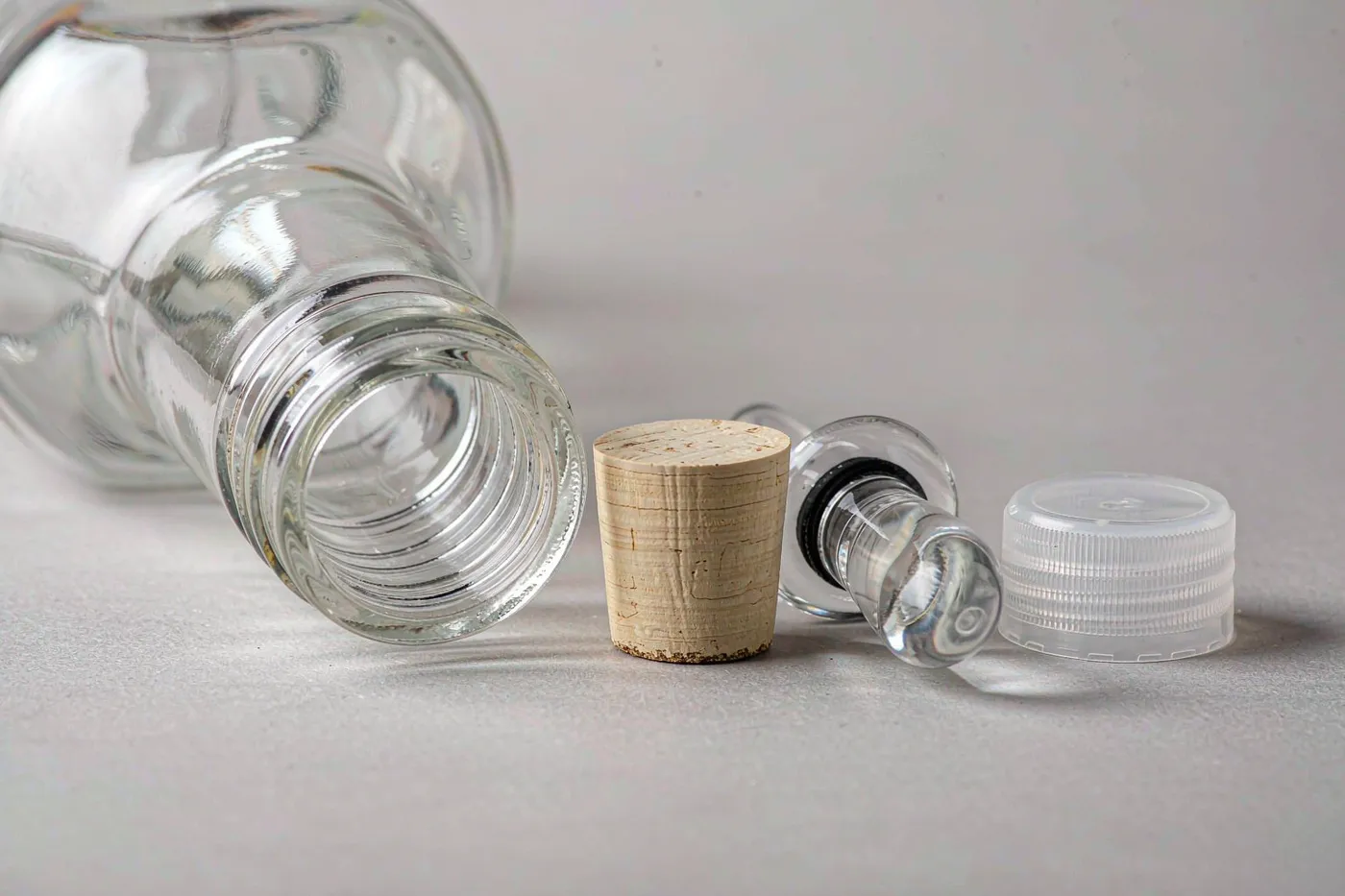
The neck finish is the hinge between bottle and closure. Most launch delays come from treating it as an afterthought: a buyer orders bottles and caps both labelled "28mm", the caps do not fit, and the shipment is unsellable.

The two coding systems you will meet
- GPI or CT codes — two numbers, diameter then thread style. 28-400 means 28 mm outside thread diameter with a 400-style thread profile. The thread style sets how many turns to seal, thread depth and pitch.
- Metric descriptive codes — ROPP diameters such as 25 mm, 28 mm, 30 mm and 31.5 mm, plus bore sizes for cork finishes.
They are not interchangeable. Always quote the exact designation, never a converted dimension.
The five dimensions that decide fit
- T — outside thread diameter.
- E — thread root diameter.
- I — bore diameter. Critical for cork and bar-top shanks.
- S — top of finish to the start of the thread or bead. Controls closure seating and tamper-band clearance.
- H — finish or seat height.
A closure matched on T alone is a closure matched on hope.
ROPP versus pre-threaded caps
- ROPP aluminium — a plain shell rolled onto the glass at the filler, giving a crisp tamper-evident break band. Standard for vodka, gin, white rum and most spirits under about 40 US dollars retail.
- Pre-threaded screw caps — cheaper tooling and simpler application, but no rolled-thread tamper evidence unless a separate band is specified.
ROPP shells are much less forgiving of glass dimensional drift than plastic continuous-thread caps. That is why the finish drawing has to be fixed before tooling.
Cork and bar-top bores
- Cork finishes are sized by the cork diameter, not the glass outside diameter.
- Bar-top shanks are commonly specified around 18.5 mm to 21.5 mm, matched to the bore with a compression fit.
- Shank material matters for shelf life. Natural cork recovers for years; cheap synthetic shanks can relax within months, which shows up as a stopper that sinks or weeps.
For spirits above 40 percent ABV stored more than twelve months, specify an ethanol-resistant surface treatment on the shank and ask for a soak test in your actual liquid.
Tamper evidence
- Bridge geometry on a ROPP band must break cleanly at the intended opening torque without leaving sharp edges.
- Application parameters on the capper, including top load and roller pressure, set the final removal torque.
- Torque retention drifts as liners relax, so ask for a retention curve at 1, 30 and 90 days.
Specifying it correctly
- Fix the finish code, thread or bore geometry, and T dimension tolerance on one drawing revision.
- Have the glass plant, closure supplier and filler all approve that revision before pilot bottles are blown.
- If you already own bottles, send physical samples so the closure supplier can measure the real finish with a go/no-go plug gauge instead of trusting a nominal code.
How the two coding systems relate
Two naming systems appear on drawings and in supplier catalogues:
- GPI / Glass Packaging Institute codes — widely used in North America, describing the finish by diameter and style, e.g. a 28 mm ROPP finish.
- Metric finish codes — common in Europe and on export drawings, describing the bore and thread geometry directly.
They describe the same physical feature and are both widely accepted. What matters is that the drawing states one system completely, including the dimensions below. A drawing that mixes systems without defining them is a common source of closure mismatch.
The dimensions in practice
- T — outside thread diameter; governs the closure shell fit.
- E — thread root diameter; governs engagement.
- I — bore; governs cork and bar-top fit and filling clearance.
- S — top of finish to start of thread; governs closure seating height.
- H — finish height; governs capping head setup.
Specify all five with tolerances. A closure catalogue selection made from diameter alone is the usual cause of a failed sealing trial.
Common specification failures
- Selecting the closure after tooling, then finding the finish is wrong.
- Quoting diameter only and omitting T, E, I, S and H.
- Changing closure supplier without re-checking the bore and liner.
- Ignoring top-load strength in the finish region, which shows up as neck cracks at capping.
All four are avoidable by fixing the closure before the drawing is signed off.
A specification checklist
- Finish code, stated in one system, complete.
- T, E, I, S and H with tolerances.
- Closure type, material and liner specification.
- Application torque or roll-on parameters.
- Tamper evidence method.
- Validation test results on production samples.
Finish defects that cause leaks
Leakage almost always traces back to the finish rather than the closure:
- Out-of-round bore — the closure seats unevenly and seals on one side only.
- Damaged or chipped sealing surface — usually a handling defect rather than a moulding one.
- Incorrect S dimension — the closure bottoms out before it seals, or never seats at all.
- Out-of-tolerance T — the roll-on shell cannot grip consistently.
All four are measurable at goods-in. A dimensional check on a small sample catches most of them before filling.
Converting between coding systems
Drawings and catalogues mix systems, and the conversion is not always clean:
- Diameter-based codes describe the nominal size, not the full geometry, so a 28 mm code from two suppliers can differ in thread profile.
- Metric geometry codes are more precise but less commonly stocked.
- Legacy and regional codes persist in some catalogues and should be treated as indicative only.
When in doubt, work from the drawing dimensions rather than the code. The code is a label; the dimensions are the specification.
Drawing control
The finish drawing is the only document that both the glass plant and the closure supplier work from, so it has to be the single source of truth. Version it, date it, and reference the revision on every sample report and every purchase order. When a failure appears at filling, the first question is always which revision was actually produced, and a plant that cannot answer it will be asked to remake the tooling.
Key takeaways
- Two coding systems describe the same feature; never mix them on one drawing without definition.
- T, E, I, S and H must all be specified with tolerances - a diameter alone is not a finish.
- Conversions between systems are indicative; the drawing dimensions govern.
- ROPP and pre-threaded finishes require different capping equipment.
- Finish defects, not closure defects, cause most leaks.
- Validate the closure against production samples before release.
Frequently Asked Questions
What is a neck finish?
The neck finish is the top portion of the bottle, including the thread or bore geometry, that the closure seals against. It is defined by a controlled drawing rather than a nominal diameter.
Does 28mm always mean the cap will fit?
No. In the GPI continuous-thread system the second number matters as much as the first. A 28-400 cap will not thread onto a 28-410 neck, because the thread profile differs. Always quote the full designation and the drawing dimensions, never a converted diameter.
What is the difference between ROPP and screw cap?
A ROPP aluminium cap starts smooth and is rolled onto the glass thread at the filler, so the thread is formed on the bottle and the tamper band breaks cleanly. A screw cap arrives pre-threaded and simply turns on, which needs less equipment but gives no rolled-thread tamper evidence unless a separate band is added.
What tolerance should I hold on the finish?
There is no universal figure; the drawing governs. Where a tolerance is quoted for a threaded finish, plus or minus 0.15mm on the T dimension is a commonly used planning band.
What is the S dimension?
S is the distance from the top of the finish to the start of the thread or bead. It controls how far the closure sits down and whether the tamper band clears the neck ring.
Should the closure be chosen before the mould is cut?
Yes. The finish is cut into the mould, so it cannot be changed afterwards without new tooling. The glass plant, the cap maker and the filler should all sign off on the same drawing revision before sampling, because a mismatch discovered at filling trials invalidates the mould.
Related
- Cork vs Screw Cap for Spirits Bottles: Sealing, Shelf Life and Cost
- Closure Liners and Seal Integrity: Stopping Leaks and Evaporation
- How to Read a Glass Liquor Bottle Spec Sheet (With a Worked Example)
Written by Eric Jiang, Glass Packaging Engineer, 12 years.