Custom Glass Bottle Decoration: Embossing, Etching, Coating and Printing
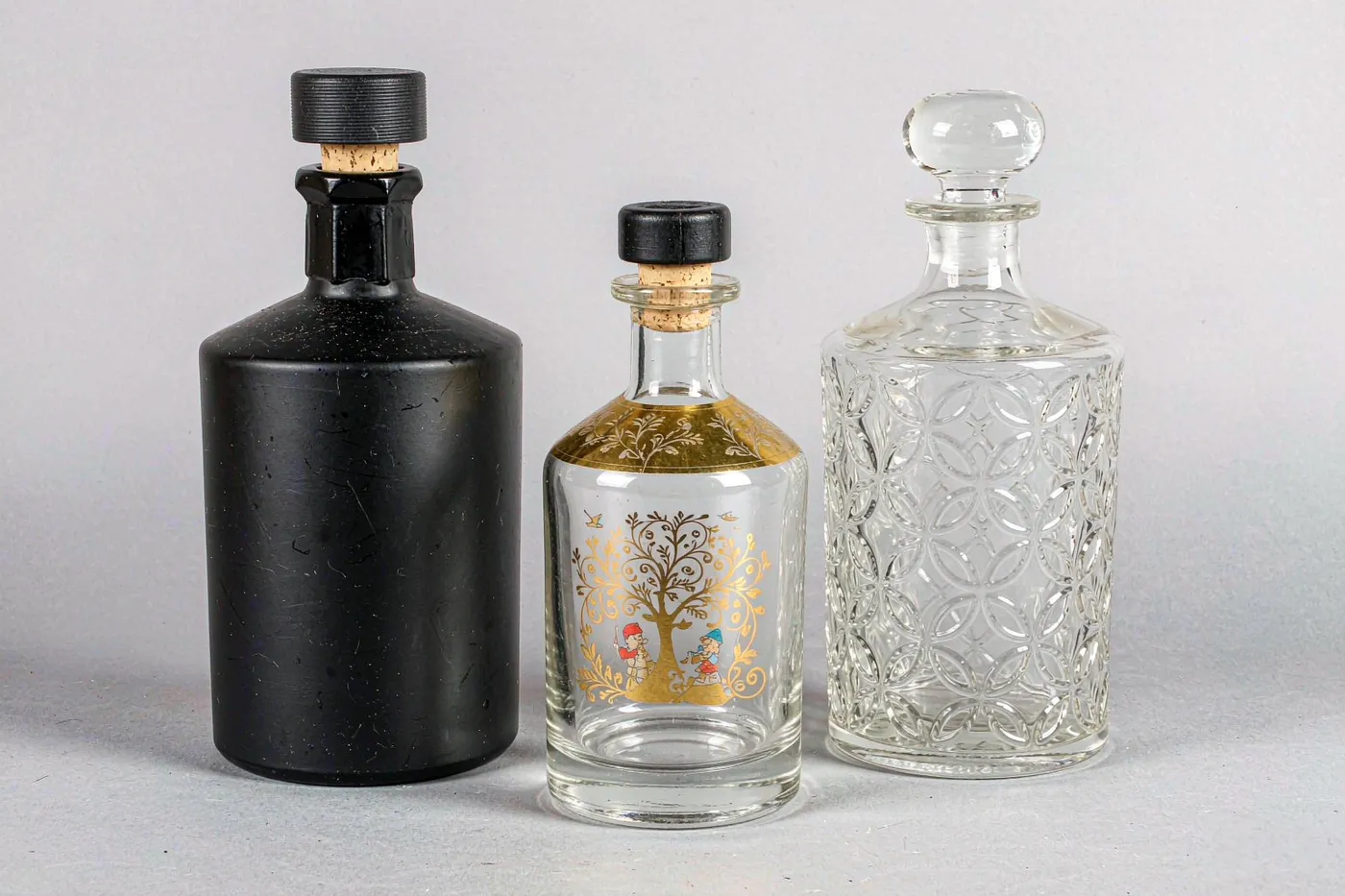
Decoration is where a stock bottle stops looking generic. The five mainstream processes sit on a spectrum: some are formed in the glass and permanent, others are applied to the surface and can wear.
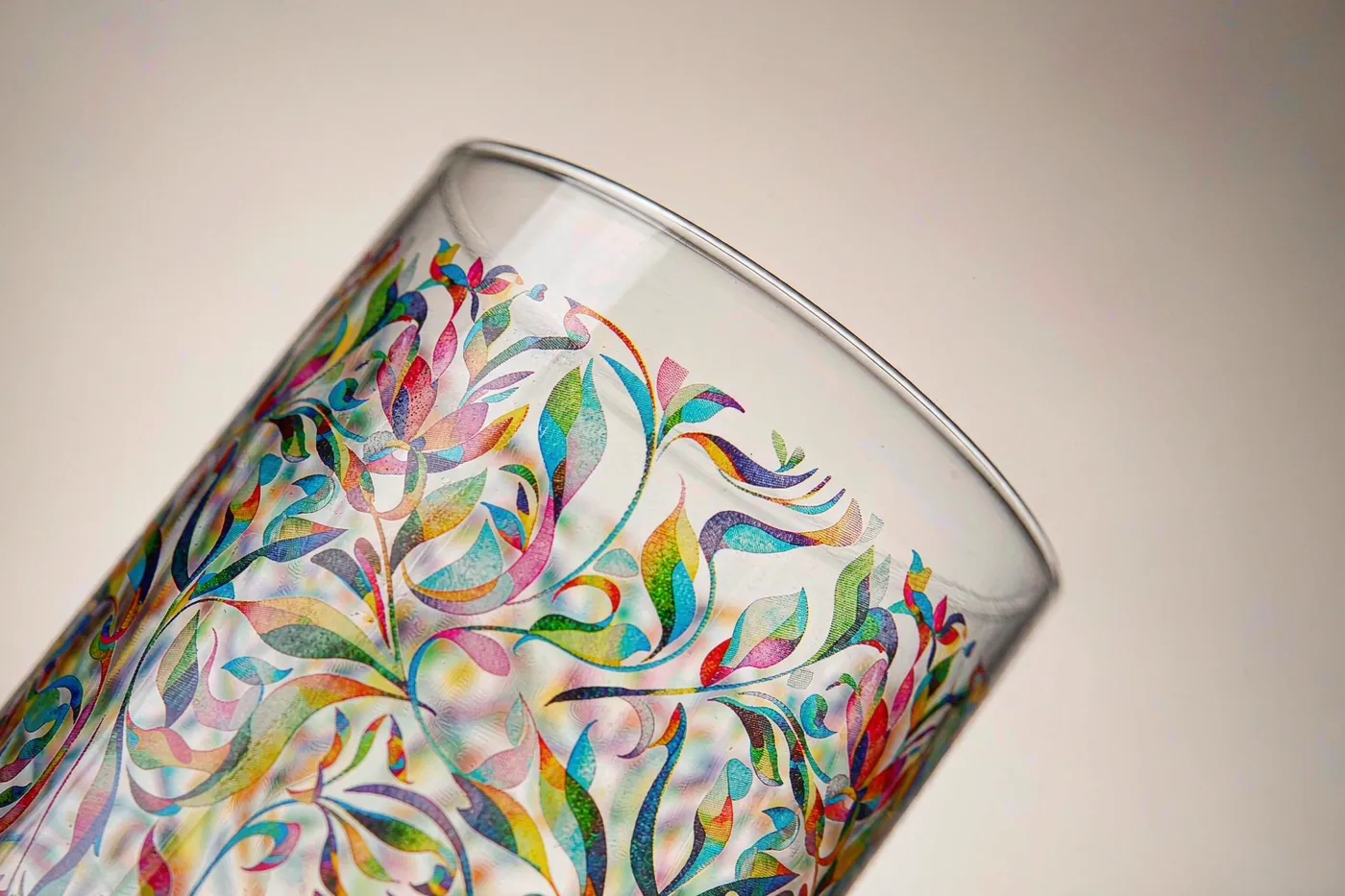
The five processes
- Embossing and debossing — raised or recessed detail formed by the mould, permanent, no per-unit cost after tooling.
- Acid etching and frosting — a matte surface produced chemically or by sandblasting; very durable because it is in the surface.
- Spray coating — full-body colour applied over the glass, including gradients and opaques.
- Screen printing — ink applied directly, good for crisp typography and spot colour.
- Decals — full-colour transfers, including photographic detail.
In-glass versus on-glass
- In-glass (embossing, etching) — permanent, survives handling, no added unit cost, but limited in colour and fine detail.
- On-glass (coating, printing, decals) — unlimited colour and detail, but adds cost per unit and can wear.
Durability ranking
- Embossing — essentially permanent.
- Acid etching — permanent, changes the surface itself.
- Ceramic coating and fired decals — high durability.
- Screen printing — good, depending on ink system and cure.
- Standard spray coating — the most scuff-prone of the group.
Ask which test method backs any durability claim. Vendors quote abrasion cycles, pencil hardness and cross-hatch adhesion differently, so the method matters more than the number.
Cost structure
Decoration adds cost in three ways:
- Tooling or set-up — screens, plates or fixtures, usually a one-off charge per design.
- Per-unit process cost — each pass adds time and handling.
- Yield loss — more passes means more opportunities for rejection.
Multi-colour and gradient work stacks these costs quickly.
Design constraints worth knowing
- Label panel geometry — curved or tapered bodies reduce the printable flat area.
- Registration — multi-pass printing needs a registration mark or jig reference.
- Minimum line weights — fine serif type can fill in during printing.
- Coating thickness — heavy coatings can change how a closure seats.
Compliance
- Coatings, inks and liners are separate food-contact materials, each with its own documentation requirements.
- Decorated surfaces may need heavy metal release testing; ASTM C738 is commonly referenced for glazed and decorated surfaces.
- Confirm that the decoration process does not compromise the food-contact status of the closure interface.
Choosing a process
- Permanent brand mark: embossing.
- Tactile premium surface: acid etching or frosting.
- Full-body colour change: spray or ceramic coating.
- Fine multi-colour artwork: screen printing or decals.
Choosing a process against a brief
Work backwards from three constraints rather than forwards from the effect you like:
- Volume — high-volume stable designs justify tooling; low-volume or variable designs do not.
- Durability requirement — distribution chain, handling and washing determine how abrasion-resistant the finish must be.
- Detail requirement — fine text and gradients rule out the relief-based processes.
Most briefs resolve to one of three standard combinations: coating plus screen print for premium, frost plus print for texture-led, or emboss only for a minimal brand.
What the decoration does to the glass
Two effects are frequently overlooked:
- Coatings change the surface friction. A fully coated bottle scuffs differently and sometimes more visibly than bare glass.
- Firing changes the stress state. Ceramic and some coatings go through a firing cycle, which can affect strength on very lightweight bottles.
On lightweighting programmes, test decorated bottles rather than plain ones — the decoration is part of the strength picture.
Compliance and the decorated surface
Decoration introduces materials that the glass itself does not:
- Heavy metals in some ceramic and enamel systems, screened on the rim and mouth-contact area.
- Coating materials which may fall under plastics food-contact rules where they contact the contents.
- Label adhesives and foils which may also need declarations.
Ask for a declaration that covers the complete decorated article, not just the container. This is the single most common gap in supplier documentation.
Cost structure by process
Ranked by tooling cost, highest first:
- Embossing — mould modification, one-off, low marginal cost.
- Ceramic coating — significant setup, moderate marginal cost.
- Screen print — setup per colour, low marginal cost.
- Acid etch / frosting — minimal setup, moderate marginal cost.
- Labelling — minimal setup, higher marginal cost.
The ranking reverses for marginal cost, which is exactly why the right choice depends on volume and design stability.
Artwork requirements by process
- Screen print — spot colours, defined per colour; fine gradients do not reproduce.
- Digital print — continuous tone is possible, but confirm the coating and curing system.
- Embossing — vector geometry only, with draft angles and relief depth defined on the drawing.
- Acid etch / frosting — defined by area and depth rather than by artwork file.
- Hot foil — defined by foil type, area and pressure parameters.
Supplying the wrong artwork format is the most common avoidable delay in a decoration programme. Ask the plant what it needs before the designer finishes.
Approving decorated samples
- Approve on production glass, not on a laboratory sample or a lookalike.
- Test adhesion and abrasion with a defined method, including any washing the bottle will see.
- Check colour under the lighting the product will actually be sold under.
- Retain a signed reference sample, because it is what any later dispute will be settled against.
Decoration across a range
A range is easier to manage if the decoration strategy is set before the first artwork:
- Fix the processes once and vary the artwork, rather than choosing a process per variant.
- Keep the colour count constant where possible, because setup is charged per colour per design.
- Use the same finish across the range so one closure specification serves every SKU.
- Define one signature treatment that appears on every variant, so the range reads as a family.
The result is a range that looks broad on shelf without a proportionally broad decoration budget.
Key takeaways
- Five processes cover most spirits decoration: embossing, coating, print, frosting and foil.
- In-glass colour is permanent; on-glass coating is flexible but less abrasion-resistant.
- Decoration introduces materials with their own compliance obligations, especially heavy metals.
- Tooling-heavy processes suit stable high-volume designs; print suits variable ones.
- Supply artwork in the format each process needs, before the design is finalised.
- Approve on production glass and retain a signed reference sample.
Frequently Asked Questions
What is the difference between embossing and printing on glass?
Embossing is formed in the glass by the mould and is permanent with no per-unit cost after tooling. Printing is applied to the surface afterwards and adds a per-unit process cost but carries finer detail and more colours.
Does frosted glass protect the liquid from light?
No. Frosting is a surface treatment rather than a change in glass chemistry, so a frosted flint bottle still transmits the full spectrum. Frosted amber keeps the amber UV block.
How durable is spray coating?
Coatings are surface layers and can scuff in transit or at the filling line, particularly at the base where bottles contact each other. Ask the supplier for the abrasion test method and the result, plus the adhesion test after immersion, rather than relying on a general durability claim.
Is a coating a food-contact material?
Yes. A coating on the bottle is a separate food-contact material and needs its own declaration of compliance, especially where it can contact the product or the mouth of the bottle.
Can I decorate a stock bottle and still look custom?
Yes. Full-body coating, frosting, screen printing, a decorated closure and a custom shipper change the shelf impression substantially without paying for tooling. Plenty of private-label ranges are built entirely this way, and the approach also lets you change the look between seasons.
What is the usual minimum for custom decoration?
It varies by process and plant, and it is normally quoted per colour per process rather than as one number. Decoration adds both a per-unit cost and often a higher minimum than plain stock bottles, because each print pass or coating batch has its own set-up, so confirm both figures at quotation.
Related
- Embossing vs Printing on Glass Bottles: Cost and Durability Compared
- Private Label Spirits Bottles: What You Can Customise at Low MOQ
- California Prop 65 and Heavy Metals in Glass Bottles and Decoration
Written by Eric Jiang, Glass Packaging Engineer, 12 years.