Private Label Spirits Bottles: What You Can Customise at Low MOQ
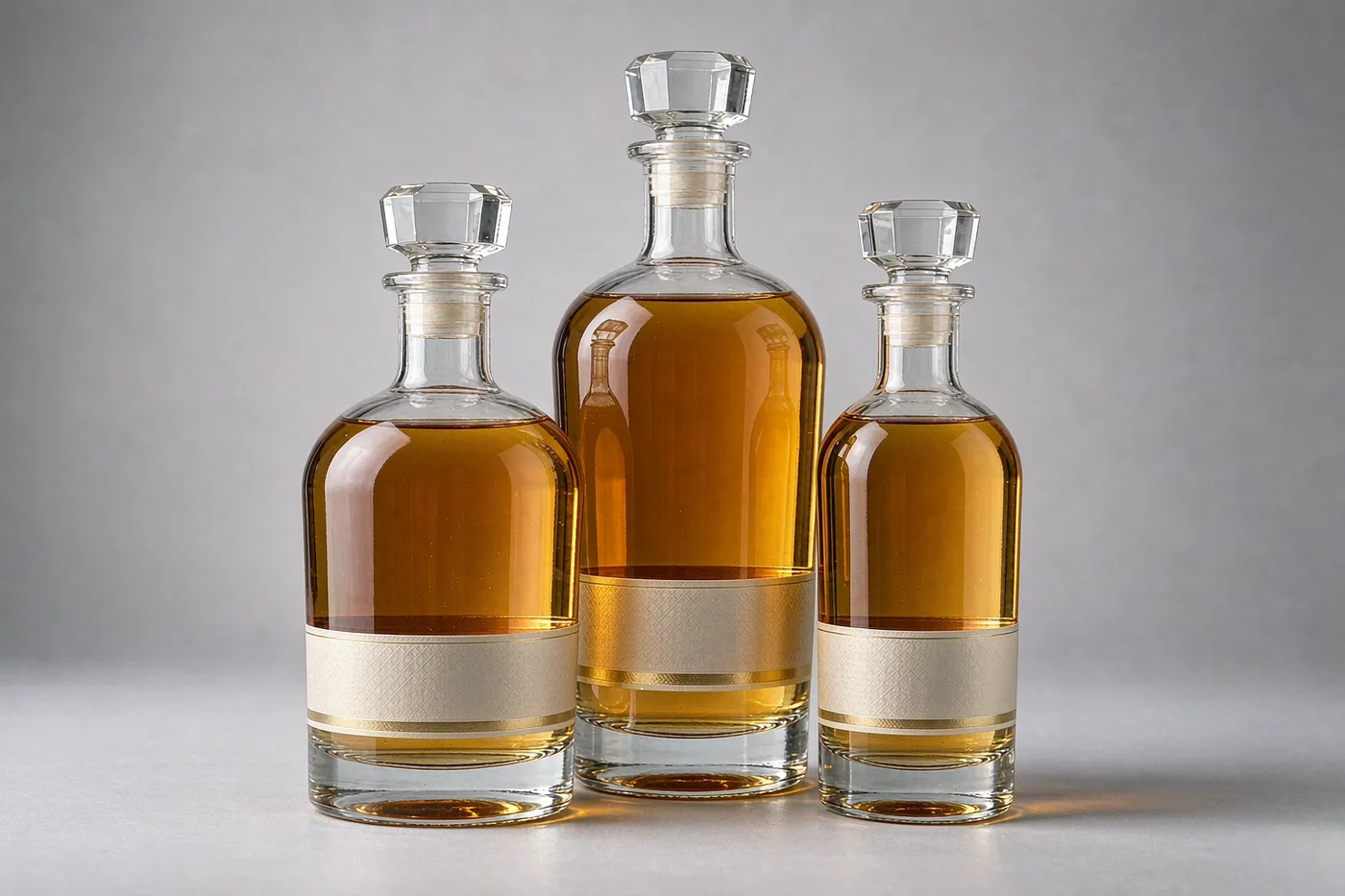
Private label does not have to mean a custom mould. The usual route is a stock shape plus decoration, which gets you most of the differentiation at a fraction of the tooling cost and lead time.
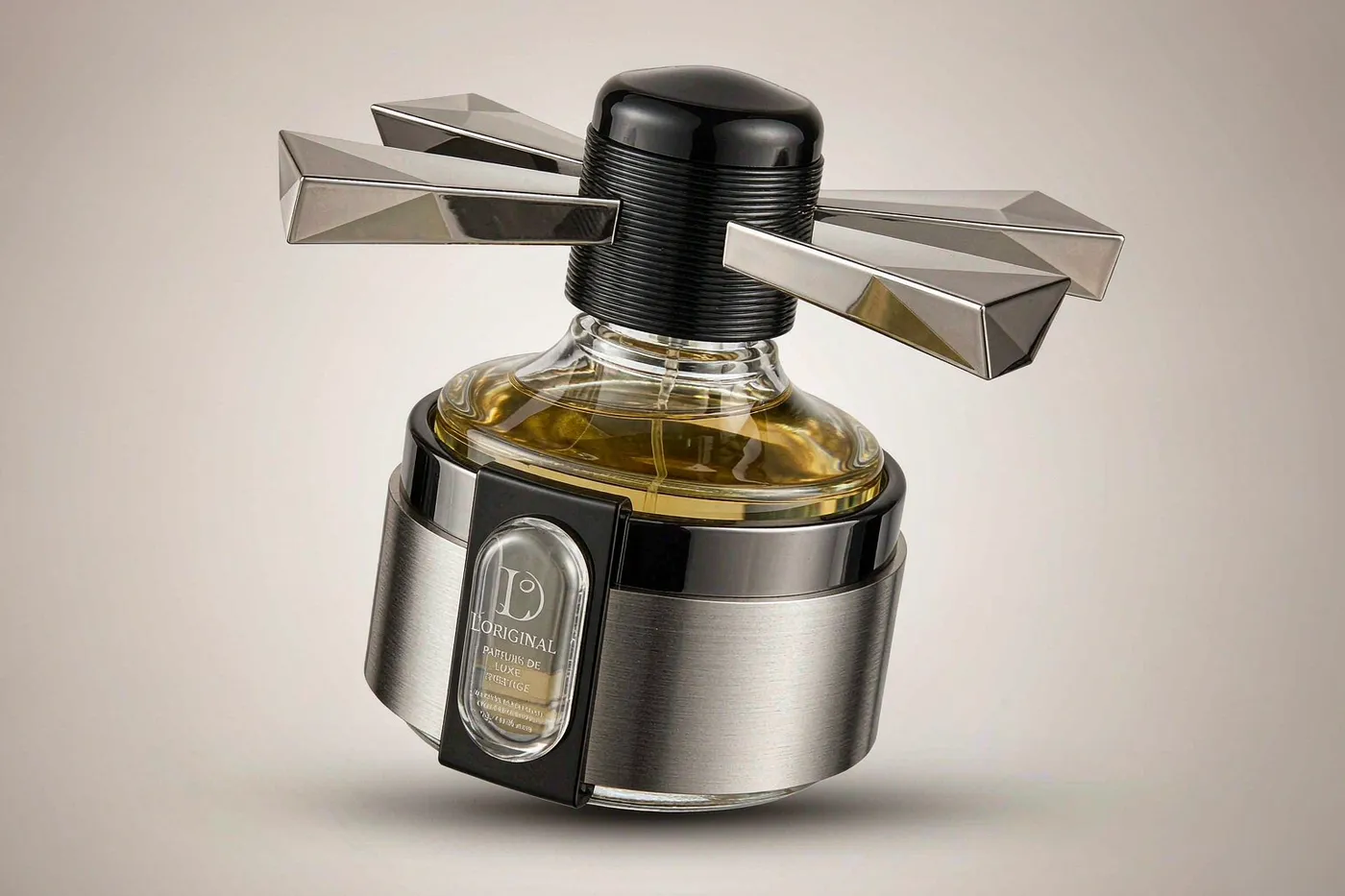
OEM versus ODM
- OEM — you own the design and the factory makes it. Highest differentiation, highest tooling cost, longest lead time.
- ODM — you choose an existing design and apply your branding. Lowest tooling cost, shortest lead time, but the shape is not exclusive.
Most new brands start with ODM and move to OEM once volume justifies tooling.
What you can customise without tooling
- Full-body spray coating — any colour, including gradients and opaque finishes.
- Frosting and acid etching — matte tactile surfaces.
- Screen printing — direct print, crisp type and spot colour.
- Decals — full-colour artwork and photographic detail.
- Closure selection — wood, zamac, synthetic or aluminium heads change the top of the bottle.
- Capsules and neck bands — low-cost premium cues.
What requires tooling
- New silhouettes — a new mould.
- Embossed or debossed marks — cut into the mould cavity.
- Unusual neck finishes — a change to the finish geometry.
Low-MOQ strategy
- Pick one stock shape and concentrate spend on decoration.
- Standardise the finish so you can change closures without new tooling.
- Limit print passes to control per-unit cost and yield loss.
- Use one signature element rather than many small ones.
Where to spend and where to save
- Spend on: the closure, and one tactile or visual signature such as frosting or deep embossing.
- Save on: print passes, exotic colours and secondary packaging complexity.
Typical programme shape
- Year one: ODM stock bottle, coating plus print, low minimum, fast sampling.
- Year two: repeat with decoration refinements, consolidate volumes by capacity.
- Year three plus: OEM custom mould if volume supports the amortisation.
Choosing between OEM and ODM
The distinction is who owns the design:
- ODM — you select from the plant's existing shapes and apply your own decoration. Fastest and cheapest route to market, and the right choice for testing a concept.
- OEM — the bottle is made to your specification, usually with new tooling. Slower and more expensive, but the shape is yours.
A sensible programme often runs ODM for the first two years and moves the core SKU to OEM once volume justifies tooling.
What decoration can achieve without tooling
More than most buyers expect. Without cutting steel you can:
- Apply spray or ceramic coatings in almost any colour, including gradients and opaque finishes.
- Add screen or digital print in multiple colours.
- Use acid etching or frosting for texture.
- Use hot foil or labels for premium accents.
Combined well, these read as a distinct bottle on shelf. The limitation is silhouette, not surface.
Where to spend and where to save
Spend on:
- The closure, because it is touched and seen at close range.
- One signature surface effect — a frost, a coating, an etched panel.
- Print quality and registration, which is the first thing that looks cheap when it is wrong.
Save on:
- Excessive print colours, which add setup cost per design.
- Secondary decorative elements that are not visible at shelf distance.
- Custom cartons for the first run, where a plain carton with a label will do.
A typical programme shape
- Months 0 to 2 — ODM selection, decoration trials, artwork approval.
- Months 2 to 4 — decorated approval samples, compliance testing, first production.
- Months 4 to 12 — market test with two or three SKUs.
- Year 2 onward — move the winning SKU to OEM tooling if volume supports amortisation.
The key is to keep the first phase short and cheap, and only commit to steel once the shape has proven itself.
Artwork and prepress requirements
Decoration programmes stall on artwork more often than on production. Supply these up front:
- Vector artwork for logos and any embossed geometry, with relief depth specified separately on the drawing.
- Spot colour callouts per print colour, because screen printing charges per colour and gradients do not reproduce.
- A dieline or panel drawing showing the flat, printable area on the actual bottle.
- Fonts outlined or supplied, since plants rarely hold the same type libraries.
Ask the plant for its artwork specification before the design is finalised. Retrofitting artwork to a process is slower than designing to it.
Approvals and colour control
- Approve on production glass, not on a proof or a lookalike sample.
- Set a colour tolerance with a physical reference rather than a Pantone number alone, because coatings shift with wall thickness and firing.
- Retain signed reference samples for every SKU and every decoration variant.
- Re-approve after any supplier or formulation change, even if the colour code is unchanged.
Colour disputes are settled against a physical reference. Without one, there is no answer, only argument.
MOQ across the decoration chain
The minimum is rarely set by the glass alone:
- Glass MOQ — set by the furnace campaign and the colour.
- Print setup — charged per design, which effectively sets a minimum economic run per variant.
- Coating batch — a minimum batch size, often per colour.
- Closure order — closure minimums are usually lower than glass, but decoration on caps adds its own setup.
Model the whole chain before quoting a programme. The binding constraint is usually print setup, not glass.
Secondary packaging and the unboxing layer
For private label, the outer layer carries more of the brand than it does for a branded product:
- The carton is the first branded surface a retail or e-commerce buyer sees.
- Set boxes and sleeves lift perceived value without touching the glass.
- Print minimums on cartons are usually lower than on glass, which makes them the cheap place to differentiate.
Budget for secondary packaging from the start rather than treating it as a finishing detail. It is often the highest-return line in a private-label programme.
Key takeaways
- ODM means selecting an existing shape and applying your own decoration; OEM means new tooling.
- Most programmes run ODM first and move the proven SKU to OEM.
- Coating, print, frosting and foil differentiate without touching the mould.
- The binding MOQ is usually print setup, not glass.
- Spend on the closure and one signature surface effect; save on secondary elements.
- Agree a physical colour reference with tolerance before production.
Frequently Asked Questions
Can I get a private label bottle at 1,000 pieces?
Yes, if you work from a stock mould. Stock shapes typically start around 1,000 to 3,000 pieces, with decoration applied on top and its own minimum per process. A fully custom shape needs considerably more, because the mould cost has to be recovered within the run.
What is the cheapest way to look custom?
A stock bottle with full-body spray coating, a screen-printed logo and a distinctive closure. That combination changes the shelf impression substantially without any mould investment, and it can be introduced or withdrawn per market without writing off tooling.
What drives MOQ up?
Custom tooling, non-standard glass colours, multi-pass printing and unusual finishes. Each adds set-up that the plant has to amortise across a run, so the minimum rises. Staying inside standard colours and a single decoration pass is usually the fastest route to a workable minimum.
Is OEM different from ODM?
OEM usually means the factory makes your design, so the tooling and drawings are yours. ODM usually means you pick an existing design and brand it, which carries lower tooling cost, a shorter lead time and less exclusivity. Most programmes run ODM first and move the proven SKU to OEM once volume justifies it.
Can I mix colours in one order?
Usually only above a per-colour minimum, because the plant has to run each colour as a separate batch, and changing colour costs furnace time. Confirm the per-colour minimum at quotation stage rather than at order stage, and expect the total order to be the sum of the colour minimums.
Related
- Custom Glass Bottle Decoration: Embossing, Etching, Coating and Printing
- Embossing vs Printing on Glass Bottles: Cost and Durability Compared
- MOQ, Lead Time and Sampling Guide for Custom Glass Bottles
Written by Eric Jiang, Glass Packaging Engineer, 12 years.