Glass Bottle Colour and UV Protection: Flint, Amber, Green and Coated
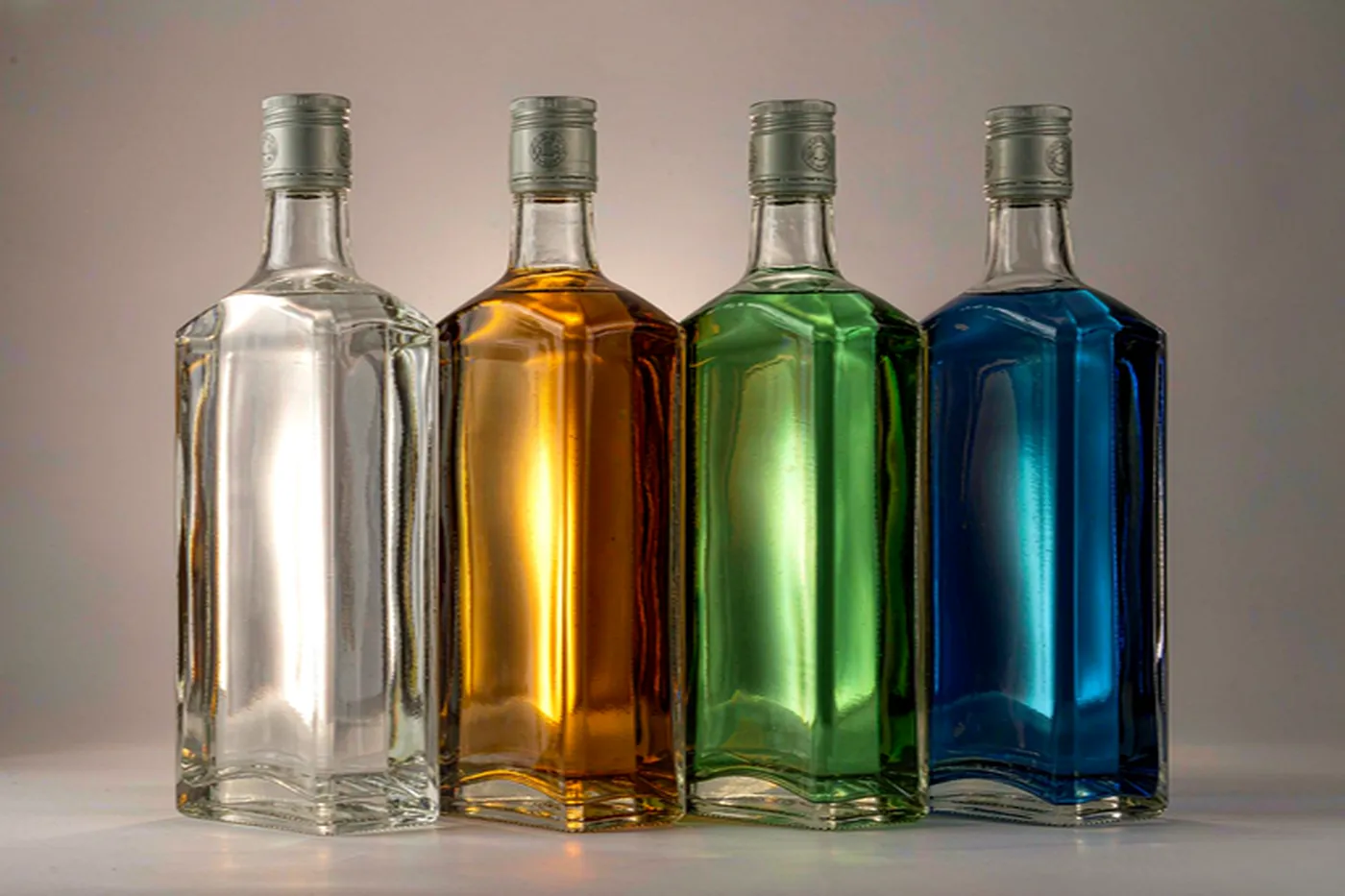
Bottle colour is a product-protection decision that happens to have a branding side effect. Flint (clear) shows the liquid and protects nothing. Amber blocks most ultraviolet and short-wavelength visible light. Green sits in between. Coatings let you put almost any colour on a flint base, at the cost of some abrasion resistance.
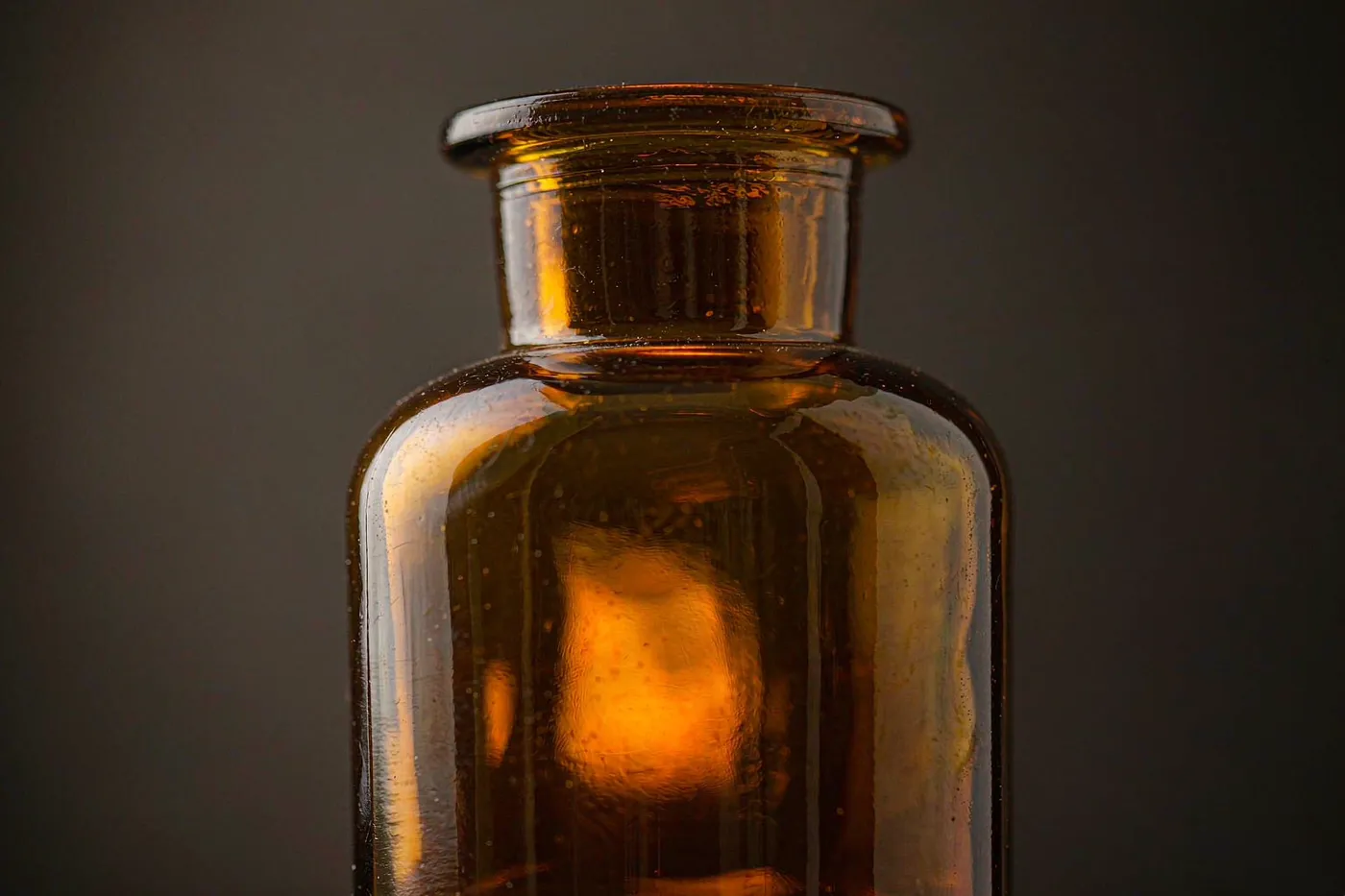
Where the colour comes from
Colour is produced by metal oxides added at the melt, not by anything applied to the surface:
- Amber — iron and sulphur with carbon.
- Green — iron and chromium.
- Blue — cobalt oxide.
- Flint — colourants removed or minimised, giving a low-iron clear glass.
Because the colour is in the glass, it survives handling and washing. That is the key difference from coating, which sits on top.
Why light damages spirits
Ultraviolet photons carry enough energy to break chemical bonds. In beer, light splits isohumulones and produces the familiar skunked character within minutes of direct sun. In spirits the effect is much slower, and it usually shows up as colour fading plus a flattening of botanical or barrel-derived aromatics over months.
Risk is highest when three conditions overlap:
- The formula contains natural colourants or botanical extracts.
- The bottle is flint or lightly tinted.
- The product sits under direct retail lighting or sunlight for weeks.
If all three apply, amber is the safer specification. If the liquid is colour-stable and shelf turn is short, flint is fine.
Colour and recycled content
Container glass in Europe already averages around 52 percent recycled content, and coloured glass generally tolerates higher cullet ratios because the recycled material carries its own colour. That is one reason standard amber and green can be cheaper per tonne than premium flint, which needs a low-iron, tightly controlled batch.
The trade-off is that glass is recycled by colour. Mixed-colour cullet reduces output quality, so unusual custom colours can be harder for recyclers to absorb.
Coatings: colour without changing the batch
Spray coating and ceramic coating put almost any colour on a flint bottle, including gradients and opaque finishes. Confirm four things before committing:
- Abrasion resistance — coatings are surface layers and can scuff in transit. Ask for the test method and result.
- Chemical resistance — the coating must survive the product, especially above 40 percent ABV.
- Food-contact status — the coating is a separate contact material and needs its own declaration of compliance.
- End of life — some coatings are not accepted in standard container glass streams.
Frosting is not protection
Frosting, whether by acid etching or sandblasting, roughens the outer surface to give a matte, soft-touch finish. It changes how the bottle looks and feels, and it hides fingerprints well.
It does not change the transmission of the glass. A frosted flint bottle still lets the full spectrum through, so it offers no ultraviolet protection. That is why frosted amber is a popular pairing: the matte texture plus the amber UV block in one bottle.
Choosing colour by spirit type
- Whisky and aged rum — amber or green protects colour; heavy flint with a thick base is chosen when the brand wants the liquid visible.
- Gin and vodka — flint dominates, because clarity is part of the proposition. Add a UV sleeve only if the product really is light-sensitive.
- Liqueurs and cream spirits — amber or opaque coating; these are the most light-sensitive formulations.
- Tequila and mezcal — flint or light green for blanco, amber or green for aged expressions.
Batch consistency
Glass colour shifts slightly between batches, because oxides are dosed by weight and furnace conditions move during a run. The difference is most visible on flint. Before a repeat order, confirm:
- The reference colour code, or a physical chip the factory holds on file.
- Whether a colour tolerance is written into the specification.
- Whether the order will come from one production batch; if not, ask the plant to hold a master reference.
How to test light sensitivity
You do not need a full stability programme to make a defensible colour decision. A simple accelerated screen is enough:
- Fill two bottles from the same batch, one flint and one amber (or coated).
- Place both under the retail lighting you actually expect — LED shelf lighting, not sunlight — plus a control kept dark.
- Sample at intervals — two, four and eight weeks is usually enough to see a trend.
- Assess colour and aroma — a panel of three is sufficient; you are looking for a consistent direction, not statistics.
If the flint sample drifts measurably against the control while amber holds, specify amber. If both hold, flint is safe and you get the shelf-visibility benefit.
Batch-to-batch colour consistency
Colour is controlled by the batch recipe and the furnace, not by the mould. Two consequences for specification:
- Ask for a colour tolerance, not just a colour name. A reference code plus an acceptable range is what a plant can actually hold.
- Expect drift across production runs. For large programmes, agree a master reference sample and a re-approval trigger at a defined interval.
This matters most for custom colours, which have no industry reference to fall back on and are more sensitive to cullet ratio.
Matching closures and capsules
Colour decisions do not stop at the glass. Three elements have to be matched:
- The closure — a bar-top stopper, a ROPP aluminium shell or a screw cap each read differently against the same glass colour.
- The capsule or sleeve — usually the first thing that shows a mismatch, because it covers the neck and shoulder in a different material.
- The print and coating — coatings can sit slightly differently over different glass colours, particularly at the shoulder where wall thickness changes.
Approve all three on one physical sample. Approving them separately is how launches end up with a visible neck seam.
Working with a colour reference
Colour is specified against a physical sample, not a number. Two things make the difference between a colour that repeats and one that drifts:
- Agree a master reference held by both parties, with a stated acceptable range around it.
- Approve under defined lighting, because glass colour shifts with light source and wall thickness.
Also confirm the cullet ratio the plant intends to run. Recycled content carries its own colour, and it is one of the main sources of batch-to-batch variation in coloured glass.
Colour and end-of-life marking
- In-glass colour keeps the pack simple to sort, because there is no additional layer to separate.
- Coatings add a material that recyclers have to accommodate, particularly for opaque or metallic finishes.
- Colour choice can affect the recyclability claim you are able to make on-pack.
Check the destination market's sorting expectations before choosing between an in-glass colour and a coating. The visual outcome may be identical; the compliance position may not be.
Key takeaways
- Flint shows the liquid and protects nothing; amber blocks most UV and short-wavelength visible light; green sits between.
- In-glass colour survives handling and washing; coating sits on top and can abrade.
- Light damage in spirits is slow, showing as colour fading and flattened aroma over months.
- A simple accelerated screen under actual retail lighting is enough to make the colour decision defensibly.
- Specify a physical colour reference plus tolerance rather than a colour name alone.
- Unusual custom colours can be harder for recyclers to absorb, since glass is recycled by colour.
Frequently Asked Questions
Does spirits really need UV protection?
Less than beer or wine, but yes for products containing natural colourants, botanical extracts or unstable colour. Light exposure fades colour and flattens aroma over months on a lit shelf.
What wavelengths does amber glass block?
Amber glass absorbs most wavelengths below roughly 450 nanometres. That covers the ultraviolet range plus the high-energy violet-blue end of visible light, which is where photolytic degradation of colour and aroma compounds is strongest. It is why amber is the default for light-sensitive spirits rather than a stylistic choice.
Is green glass protective enough?
Green gives partial protection, with industry figures commonly quoted in the 50 to 70 percent range depending on shade and thickness. It suits shorter exposure windows and products that are less colour-critical, but it is a compromise rather than an equivalent to amber for a genuinely light-sensitive liquid.
Can I get UV protection in a clear bottle?
Not from the glass itself, because flint transmits most of the spectrum. An external UV sleeve, a shrink wrap or a UV-absorbing spray coating gives partial protection, and a carton or shipper gives more. If the product is genuinely light-sensitive, coloured glass is the more reliable route.
Does frosted glass protect against light?
No. Frosting is a surface treatment rather than a change in glass chemistry, so a frosted flint bottle still transmits the full spectrum. Frosted amber keeps the amber UV block.
Does recycled content limit colour choice?
It can. Cullet carries its own colour, so very light custom tints and precise flint whites are harder to hit when the batch is running high recycled content, and the variation appears between batches. Raise it at sampling, and agree the acceptable colour range in writing.
Related
- Liquor Glass Bottle Buyer's Guide 2026: Capacity, Glass Type, MOQ and Cost
- Glass vs Aluminium vs Plastic Bottles for Spirits: A Buyer's Comparison
- Lightweighting Spirits Bottles Without Breaking Them
Written by Eric Jiang, Glass Packaging Engineer, 12 years.