Glass vs Aluminium vs Plastic Bottles for Spirits: A Buyer's Comparison
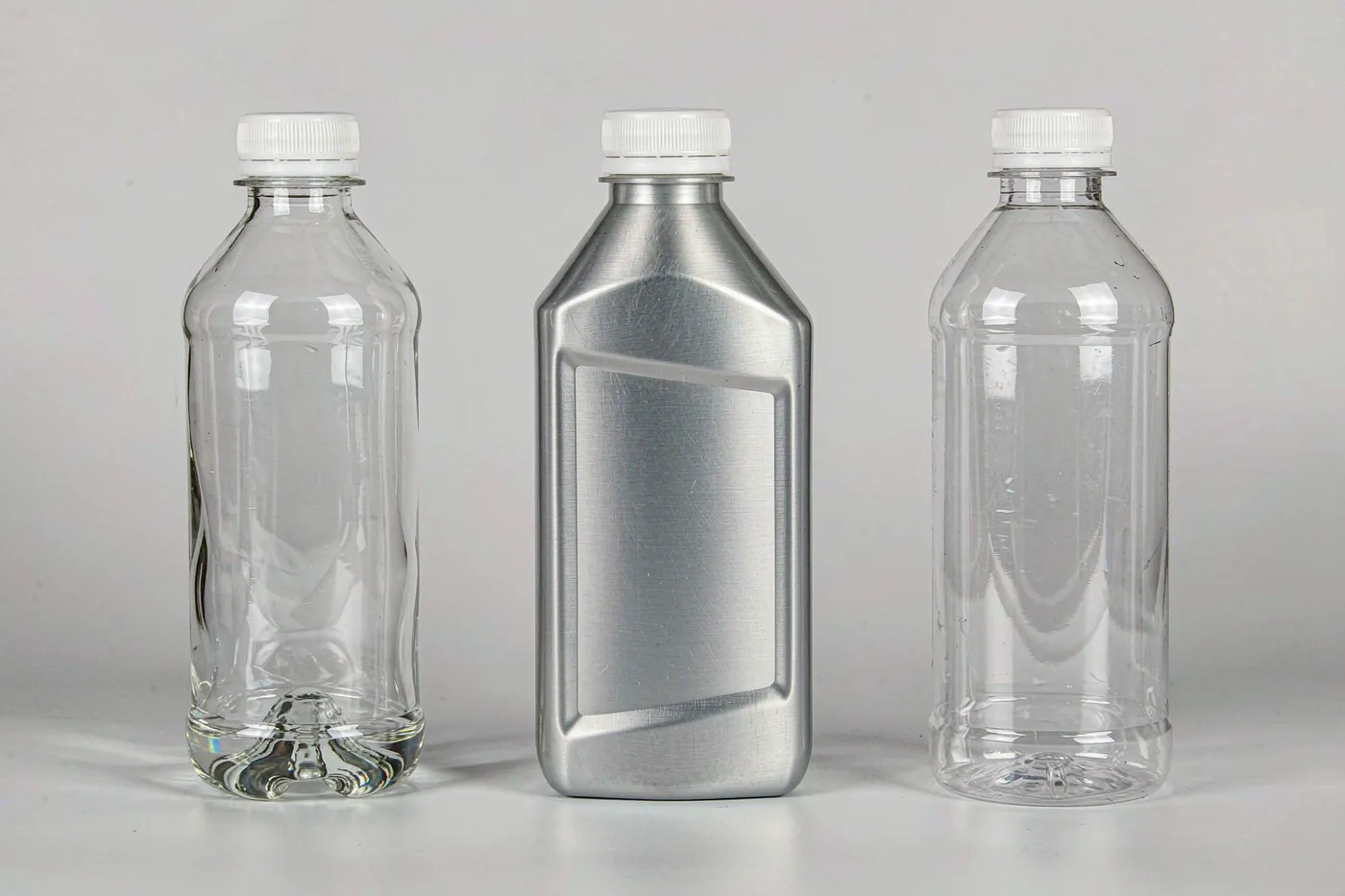
Glass is the default for spirits, aluminium is the challenger in ready-to-drink and outdoor formats, and plastic is mostly confined to low-proof or short-life products. The decision turns on barrier behaviour, product visibility, regulatory acceptance and landed cost. No single material wins all four, which is why the real question is which one matters most for your price tier and channel.
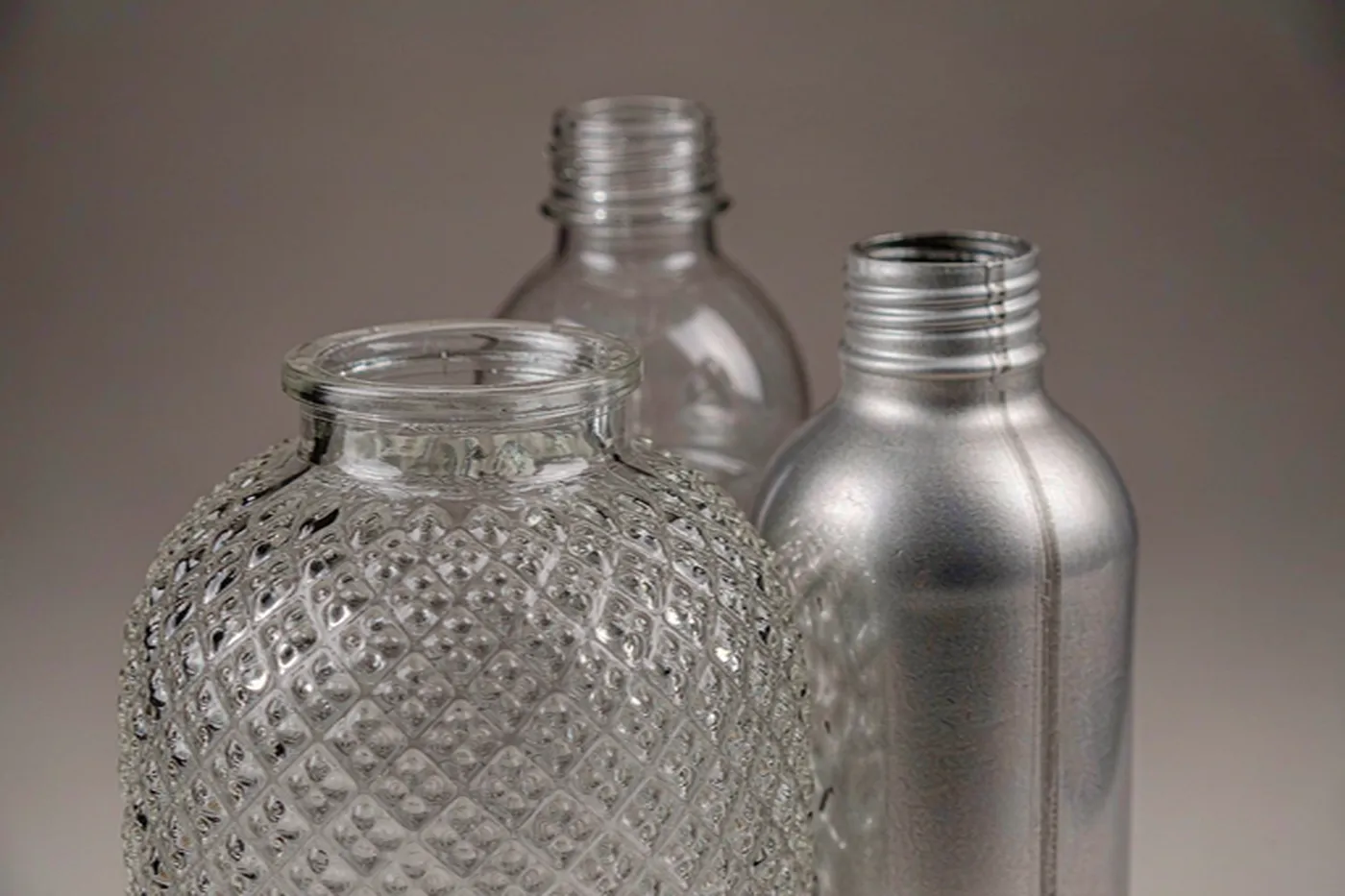
Where each material wins
- Glass — inert, impermeable, supports the widest decoration range, universally accepted for high-ABV contents.
- Aluminium — lightest rigid option, unbreakable, fast chilling, strong for outdoor and events. Needs an internal lacquer.
- PET — lowest weight and unit cost, good drop resistance, weakest barrier and lowest premium perception.
Glass wins on barrier and decoration, aluminium on weight and durability, plastic on cost and resilience. Weighting those against your margin structure gives the answer.
Barrier and chemical behaviour
Spirits are aggressive: 40 percent ABV and above, frequently carrying citrus oils, botanicals or sugar.
- Glass is chemically inert, so there is no migration from the container wall and no flavour scalping. This is why it stays the reference material for long shelf life, and why the glass industry widely cites glass as the only packaging material the FDA regards as generally recognized as safe (GRAS).
- Aluminium must be internally lacquered, and that lining becomes the food-contact surface requiring its own declaration of compliance.
- PET allows slow oxygen ingress and can scalp volatile aroma compounds, which limits its use for premium aged spirits.
Barrier performance is the reason plastic has never displaced glass in full-proof spirits despite the weight penalty.
Product visibility
- Flint glass is the only option that shows the liquid. Critical for vodka, gin and clear liqueurs.
- Amber glass hides the liquid but protects it.
- Aluminium and most plastics are opaque, so the label carries the entire visual load.
Visibility matters most when the liquid's clarity or colour is part of the quality promise. It matters least for aged dark spirits or cream formulations.
Weight, freight and breakage
This is where glass loses:
- Glass is the heaviest per unit volume, raising freight cost and breakage exposure.
- Aluminium roughly halves weight versus glass at comparable volume and removes breakage almost entirely.
- PET is lighter still, and its resilience allows thinner secondary packaging.
Lightweighting narrows the gap but does not close it.
Regulatory acceptance
- Glass — universally accepted as a food-contact material.
- Aluminium — accepted, with the internal coating regulated separately.
- Plastics — the most prescriptive regime, including the EU's Regulation (EU) No 10/2011 on plastic food-contact materials.
Important nuance: EU 10/2011 covers plastics and plastic coatings. Uncoated glass is not covered by it. Glass sits under the framework Regulation (EC) No 1935/2004 plus national rules in the destination member state.
Brand and shelf considerations
- Glass supports embossing, acid etching, frosting, spraying and screen printing, the widest decoration latitude of the three.
- Aluminium supports high-quality printing but cannot be embossed the same way.
- Plastic is usually sleeved or labelled rather than decorated directly.
Choosing a material
- Premium aged spirits — glass, heavy base, amber or green.
- Clear spirits where clarity sells — flint glass.
- Ready-to-drink and outdoor — aluminium.
- Low-proof or short-life — PET, if the market accepts it.
Lifecycle emissions: the honest answer
Ask three practitioners which material has the lowest footprint and you will get three answers, because the result depends on system boundaries rather than on the material in isolation.
- Recycled content moves the result more than material choice does. FEVE's life-cycle figures show each 10 percent increase in cullet cuts energy use by roughly 3 percent and CO2 by roughly 5 percent.
- Transport distance matters most for glass, because it is the heaviest option per unit of liquid carried.
- Recycling rate at destination matters most for aluminium, which benefits strongly from high capture and remelt rates.
- Trips through the system matter for refillable glass, which can beat single-use formats after only a handful of reuse cycles.
The defensible claim for a brand is therefore not "glass is greenest." It is "we use a high-recycled-content bottle, shipped by sea, into a market with established glass recycling." That is specific, checkable, and survives scrutiny.
Real-world failure modes by material
- Glass — scuffing on decorated surfaces, neck cracks under capping load, thermal shock breakage on hot-fill lines.
- Aluminium — internal lacquer damage from aggressive formulations, denting in transit, liner incompatibility.
- PET — slow oxidation over long storage, aroma scalping, panel deformation at high temperatures.
Each has a known mitigation, and none is a reason to rule the material out. They are reasons to specify properly.
How to brief a material comparison
- State the ABV, sugar content and any citrus or botanical load, because these drive barrier and liner choice.
- State the target market and channel, because this drives size, recycling labelling and closure norms.
- State the expected annual volume, because this drives whether tooling is viable.
- Ask for test reports per material and decoration, not general marketing claims.
Closure and barrier considerations
Material choice constrains closure choice, and the two should be specified together:
- Glass — the widest closure range. ROPP, screw, cork and bar-top are all available, and the finish is cut into the mould, so it has to be decided early.
- Aluminium — typically threaded or ROPP-compatible, with liner compatibility the main variable.
- PET — usually a screw finish, with oxygen and carbonation performance driving the liner and barrier choice.
On barrier, glass is effectively impermeable, aluminium depends on the internal lacquer, and PET allows slow gas transfer over time. For a product with a long expected shelf life, that difference is usually decisive.
A practical decision path
- Is the product high-proof with a long declared shelf life? Glass or aluminium; PET only with a barrier assessment.
- Is shelf visibility of the liquid a selling point? Glass, flint.
- Is weight a hard constraint in the channel? Aluminium, or lightweighted glass.
- Is the destination's recycling infrastructure favourable to glass? Glass; otherwise weigh the alternatives honestly.
- Is the volume too low for tooling? A stock mould in whichever material, with decoration doing the differentiation.
Most briefs resolve at step 1 or step 2. The rest is confirmation.
Key takeaways
- Recycled content moves the footprint more than material choice does; roughly 3 percent energy and 5 percent CO2 per 10 percent cullet.
- Glass is the heaviest to ship, aluminium gains most from high capture rates, refillable glass gains from reuse cycles.
- Glass is effectively impermeable; aluminium depends on its internal lacquer; PET allows slow gas transfer.
- Each material has known failure modes with known mitigations - none rules the material out.
- Brief a comparison with ABV, formulation, market, channel and annual volume stated.
- Most briefs resolve on shelf life or product visibility before weight is considered.
Frequently Asked Questions
Is glass always the most premium option?
For spirits, glass remains the default premium signal because it is inert, rigid and heavy in the hand. Aluminium is gaining ground in ready-to-drink and outdoor formats but does not yet carry the same shelf authority for full-proof spirits.
Why not use PET for spirits?
PET is light and cheap but permeable over time, and high alcohol content plus essential oils can interact with the polymer. In practice it is limited to low-proof or short shelf-life applications.
Which material has the lowest carbon footprint?
It depends on system boundaries, transport distance and recycled content rather than the material alone. Glass performs better with high cullet ratios and short transport; aluminium benefits strongly from lightweighting and high recycling rates.
Can I put a cork in an aluminium bottle?
Generally no. Aluminium bottles use screw necks, ROPP finishes or crown-style closures rather than a traditional cork bore, because the metal body cannot provide the elastic compression a cork needs. If a cork finish is essential to the brand, glass is the practical substrate.
Does cobalt blue protect as well as amber?
No. Blue glass outperforms flint and green in some wavelengths but is generally less protective than amber across the UV range, so it is chosen for appearance rather than maximum light protection. For a genuinely light-sensitive product, amber remains the safer specification.
Is heavier glass always better?
No. Weight raises perceived value, but it also raises material cost, freight cost and breakage energy, and it can push a design away from the top-load and handling profile the filling line is set up for. The right weight is set by the channel and the target shelf price.
Related
- Glass Bottle Colour and UV Protection: Flint, Amber, Green and Coated
- Lightweighting Spirits Bottles Without Breaking Them
- Liquor Glass Bottle Buyer's Guide 2026: Capacity, Glass Type, MOQ and Cost
Written by Eric Jiang, Glass Packaging Engineer, 12 years.