Export Packaging and Shipping for Glass Liquor Bottles
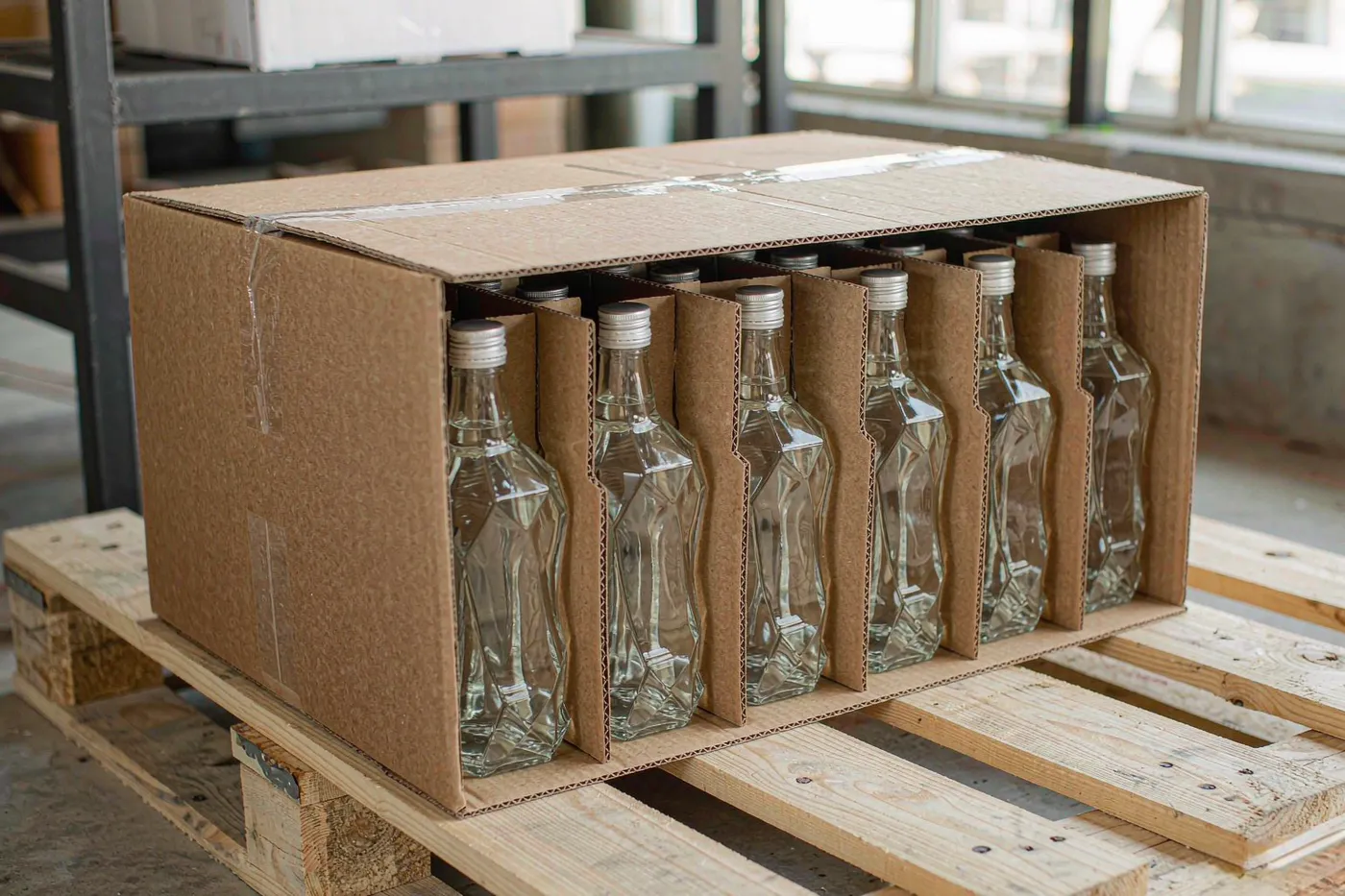
Shipping glass is an exercise in controlling two variables: weight and impact. Every packaging decision trades one against the other.
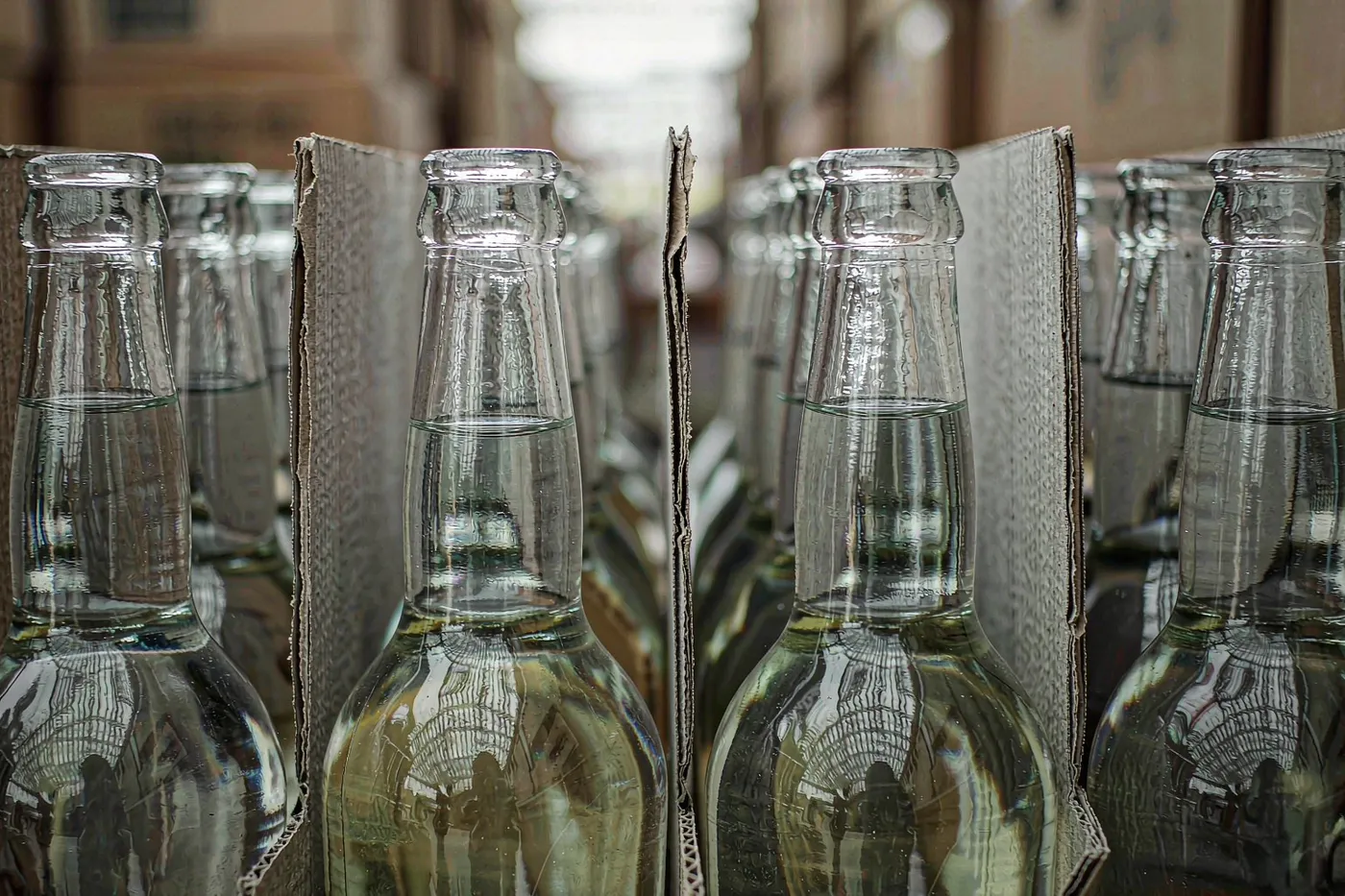
The packaging stack
- Primary: the bottle itself, its weight and wall distribution.
- Secondary: the carton, dividers and inserts that stop bottle-to-bottle contact.
- Tertiary: the pallet, its pattern, stretch wrap and corner protection.
Most breakage is a secondary-packaging failure, not a glass failure.
Carton specification
- Board grade and flute — chosen against stacked pallet weight, not just bottle weight.
- Dividers — essential for decorated bottles; they prevent glass-on-glass scuffing.
- Fill count — more units per carton lowers cost but raises stacking load.
- Closure method — tape, glue or strapping, depending on the destination's humidity profile.
Ask the supplier to confirm the carton against a compression test rather than a rule of thumb.
Palletising
- Pattern — column-stacked is stable; interlocked resists shifting but can crush lower layers.
- Layer sheets — spread load and stop carton edges cutting into the layer below.
- Stretch wrap — contains the load; the wrap force matters as much as the film.
- Corner boards — protect against strap and handling damage.
Sea versus air
- Sea freight — the default. Charged by container, so weight matters less than cube until you hit payload limits.
- Air freight — charged by chargeable weight, so glass is almost always uneconomic except for urgent samples.
For a full container, the practical constraint is usually volume before weight, which means lightweighting saves material cost more than freight cost on dense pallets.
Freight terms
- EXW — you collect from the factory; you carry all risk and formalities from the door.
- FOB — the supplier delivers onto the vessel; risk transfers at shipment.
- CIF — the supplier also pays freight and insurance to the destination port.
- DAP and DDP — the supplier handles delivery, and with DDP also duty and taxes.
Choose the term you can actually administer. FOB is the common default for experienced importers.
Damage control
- Agree an acceptable breakage percentage in writing before shipment.
- Require photographic evidence and a packing list reference for any claim.
- Keep retained samples from the same batch for comparison.
- Specify carton drop and compression testing for new programmes.
Packing checklist
- Confirm carton board grade, flute and divider specification.
- Confirm pallet pattern, layer sheets and wrap force.
- Confirm the freight term and who insures the transit leg.
- Confirm labelling requirements for the destination.
- Confirm a written breakage allowance and claims procedure.
What to specify on the carton
Ask for these four items in writing, because they are what determine whether cartons survive stacking:
- Board grade and flute — e.g. a specified kraft liner and flute profile, not a generic "strong carton".
- Edge Crush Test value — the standard measure of board strength, and the input to any stacking calculation.
- Box Compression Test result or target — the actual stacked-load performance.
- Units per carton and carton dimensions — needed by your forwarder for container planning.
A carton quoted by weight alone is not specified. Board performance is what carries the stack, not grammage.
Palletising decisions that matter
Three choices drive most in-transit damage:
- Pallet pattern — interlocking patterns resist shifting better than column-stacked ones.
- Layer separation — dividers or layer pads prevent glass-on-glass contact, the most common scuffing source.
- Wrap and top protection — stretch wrap tension plus a top sheet or corner protection stops load shift in transit.
Also confirm pallet type. Heat-treated wood with the ISPM 15 mark is required for most international shipments, and a missing mark can hold a container at destination.
Testing before you commit to a pack specification
Two tests catch most problems before a full container is at risk:
- Drop and vibration testing to a recognised transit procedure — identifies carton and cushioning weaknesses.
- Compression testing under humid conditions — board loses a significant share of its strength at high humidity, which matters for sea freight.
Run both on production-filled cartons, not empty ones. Loaded bottles behave differently under impact.
Cost levers, in order of effect
- Reduce glass weight — cuts freight cost and usually breakage at the same time.
- Increase units per carton where the format allows — lowers handling cost per unit.
- Right-size the carton — removing void space removes the need for void fill.
- Consolidate containers — fewer, fuller containers beat frequent part loads.
Note that the first lever is a mould decision, not a packing decision. It has to be made at specification stage.
Insurance, claims and evidence
Breakage claims are settled on evidence, so build the evidence into the process:
- Photograph pallets before loading, including wrap and corner protection.
- Record the carton specification on the shipping documents, not just the commercial invoice.
- Keep the compression and drop test reports for the pack in question, dated before the shipment.
- Note any container stuffing exceptions at the time, not after arrival.
Most rejected claims fail on documentation rather than on the merits of the case.
Common specification gaps
- No stated board grade or ECT value, so nothing to test against.
- Pallet pattern undefined, leaving load stability to the stuffing crew.
- No humidity consideration for long sea routes.
- Carton dimensions not supplied until after container booking.
Each of these is cheap to fix at specification stage and expensive to fix at destination.
Documenting the packaging specification
Put the carton grade, divider type, units per carton, pallet pattern and stretch-wrap specification on one document and reference it from the purchase order. Damage claims are assessed against that document, not against what either side remembers agreeing, and a specification that only exists in email is difficult to enforce after the container has arrived.
Key takeaways
- Shipping glass is an exercise in controlling weight and impact; every decision trades one against the other.
- Specify board grade and ECT value, not grammage - board performance carries the stack.
- Most breakage is secondary-packaging failure, not glass failure.
- Confirm heat-treated pallets carrying the ISPM 15 mark before booking.
- Test drop, vibration and humid compression on filled cartons.
- Photograph pallets before loading; most rejected claims fail on documentation.
Frequently Asked Questions
What is the standard export carton for glass bottles?
There is no universal standard, because it depends on bottle size, weight and decoration. Most export programmes use divided cartons on a palletised, stretch-wrapped pattern, with board grade, divider type and pallet pattern quoted per project and validated by a transit test.
Should I ship bottles by sea or air?
Sea for almost everything. Air is only justified for urgent samples or very high-value, low-weight shipments, because glass weight makes air freight uneconomic and the breakage risk in air handling is not lower. Plan the calendar around ocean transit rather than paying to compress it.
How much breakage is normal?
There is no universal figure. A well-specified carton and pallet pattern should keep breakage at a level your contract defines, so agree an acceptable percentage with the supplier in writing.
Is bulk pallet or case pack better?
Bulk pallets are cheapest and need automated depalletising at the filling line. Case packs with dividers cost more but protect decorated surfaces and suit manual lines. If your bottler has no depalletiser, bulk is not an option regardless of price, so confirm the line equipment first.
Do I need fragile labels?
They do not prevent breakage, but retailers and some carriers expect them, and they support claims handling when damage occurs. More useful than the label is documented transit testing and a carton specification agreed in writing, because those are what a claim is actually assessed against.
How does bottle weight affect shipping cost?
Directly. Freight is billed on weight or volume, whichever is greater, and glass is dense enough that weight usually wins. Lightweighting therefore reduces cost per unit across every shipment, and it also reduces handling injury risk at the distribution centre and the filling line.
Related
- Lightweighting Spirits Bottles Without Breaking Them
- How to Choose a Glass Bottle Supplier for Export Spirits
- MOQ, Lead Time and Sampling Guide for Custom Glass Bottles
Written by Eric Jiang, Glass Packaging Engineer, 12 years.