United States Spirits Bottle Market Guide for Exporters
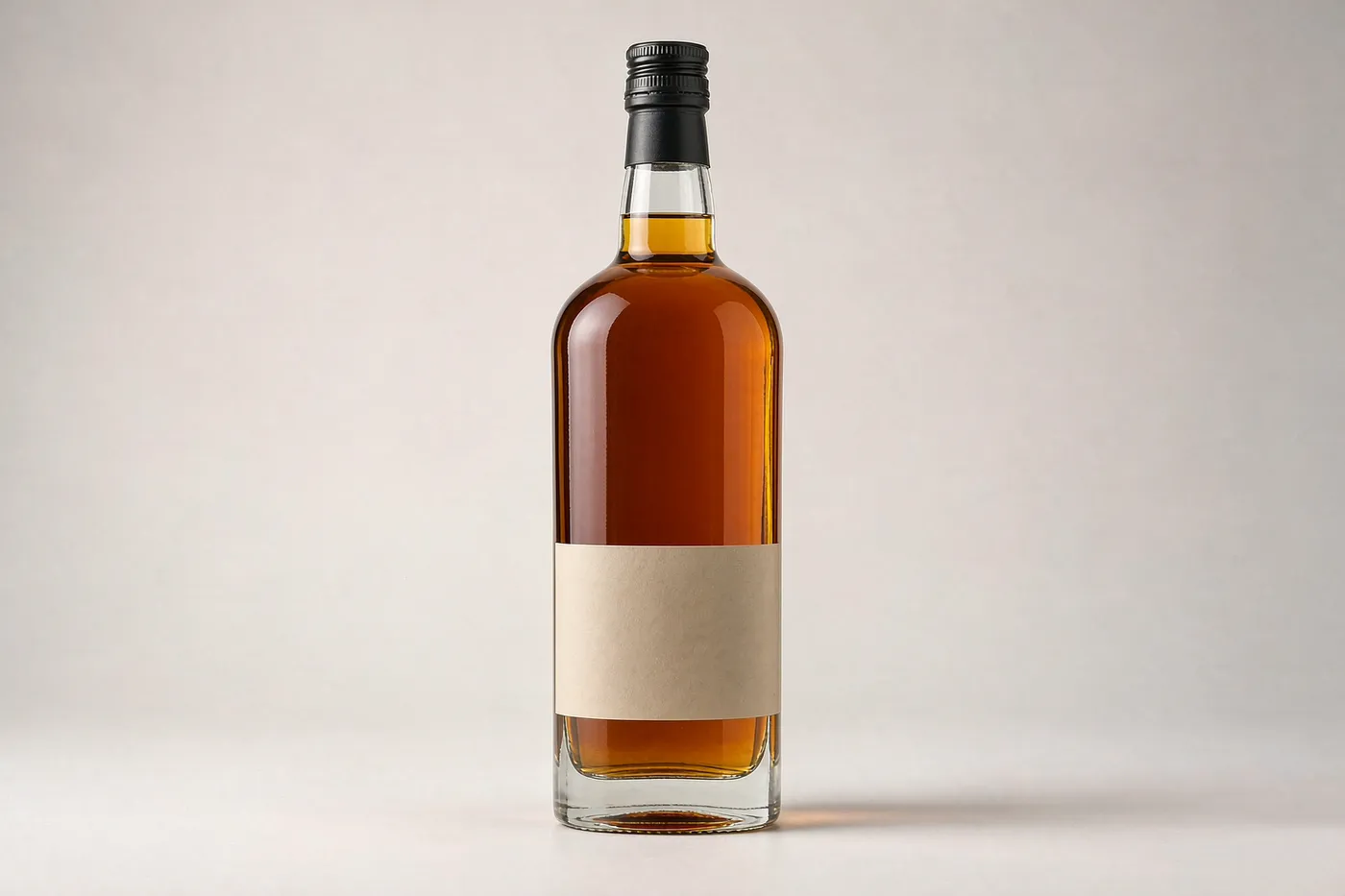
The US is the largest spirits market by value and one of the most structured: container sizes are fixed by federal rule, labelling is prescriptive, and distribution runs through a three-tier system that shapes how brands buy packaging.

The size mix that moves
- 750 ml — the retail benchmark across whisky, vodka, gin, rum and tequila.
- 1.75 L — the handle; high-volume retail and on-trade.
- 1 L — strong in travel retail and several urban markets.
- 375 ml — liqueurs, premium small formats, gift packs.
- 200 ml and 50 ml — single-serve, airline, hotel minibars, sampling.
Sizes are not a design choice here. TTB authorises a specific list under 27 CFR 5.203(a)(1), and a size outside it cannot be sold as a prepacked spirit.
Who regulates what
- TTB — container size, standards of fill, headspace, and the labelling of beverage alcohol.
- FDA — food-contact safety of the packaging material itself.
- California OEHHA — Prop 65 warning obligations at state level.
Three separate regimes, three document sets. A supplier who mentions only one has probably not shipped into the US before.
What US buyers expect in a quote
- Item code and a drawing with finish geometry fixed.
- Brimful capacity, nominal fill and weight, each with a tolerance.
- Carton specification and pallet pattern.
- Compliance documentation for the glass and, separately, for any coating, ink or liner.
Channels shape the bottle
- Off-premise retail — shelf visibility and label panel size dominate.
- On-trade — pourer compatibility and durability matter more.
- Travel retail — 1 L formats and gift presentation.
- E-commerce — drop resistance and secondary packaging quality.
Practical notes for first-time exporters
- Confirm the authorised size list before you finalise artwork.
- Test decorated bottles for heavy metal release if you sell into California.
- Keep batch traceability records for any future claim.
- Budget customs clearance and inland delivery as a separate calendar line, not part of production time.
The three-tier system and what it means for packaging
The US distributes spirits through a three-tier structure: producer, distributor, retailer. Two packaging consequences follow directly:
- Your distributor is your customer, not the retailer. Their requirements on case pack, pallet configuration and labelling are what you actually have to meet.
- Case pack is standardised — bottles are ordered and moved in defined case quantities. Confirm the expected configuration before you specify the carton.
Getting the case configuration wrong is expensive, because it is discovered at the warehouse rather than at the plant.
What US distributors expect in a quotation
Four items are routinely requested and frequently missing from export quotations:
- Case pack and pallet configuration — units per case, cases per pallet, pallet dimensions.
- Neck finish code stated explicitly, because it determines closure sourcing.
- Compliance documentation — food contact declaration plus California Prop 65 position.
- Lead time stated from drawing approval, not from deposit.
A quotation that covers these reads as competent. One that does not generates a round of questions that delays the order.
Label and regulatory reality
Two agencies matter:
- TTB governs standards of fill, labelling and formula approval for distilled spirits. Standards of fill sit under 27 CFR 5.203; label approval is a separate process.
- FDA governs food contact materials, including the closure liner and any coating.
Note the division: the bottle's capacity is a TTB question, while the bottle's material safety is an FDA question. They are separate submissions.
Practical notes for a first US shipment
- Confirm the authorised size before tooling — the US list does not match the EU list, and 700 ml and 750 ml are separate SKUs.
- Book label approval early — it sits on the critical path and depends on the final artwork.
- Plan for Prop 65 screening on decorated surfaces, particularly the rim area.
- Ship full containers where possible — domestic US warehousing is expensive relative to the freight saving of part loads.
State and channel variation
The US is not one packaging market:
- State-level rules differ on deposit schemes, recycling labelling and, in some cases, container requirements.
- Control states operate their own distribution systems, which affects listing and packaging requirements.
- On-trade and off-trade want different formats — the on-trade favours standard sizes and durable decoration; off-trade rewards shelf presence.
Confirm which states your distributor serves, then check requirements for those specifically rather than assuming a national position.
Packaging requirements from distributors
Distributors are your practical customer, and their requirements are concrete:
- Defined case pack and pallet configuration, because their warehouses are built around standard cases.
- Barcodes and case codes in the format their systems expect.
- Consistent packing across shipments, since inconsistency creates handling cost at the warehouse.
- Lead times stated from drawing approval, which is what they can plan against.
Meeting these costs little at specification stage and a great deal after production.
Getting the first listing right
- Confirm the size against the authorised list before tooling — this is the single decision that cannot be reversed cheaply.
- Match the case pack to the distributor's warehouse, not to what is convenient at the plant.
- Allow time for label approval as a distinct stage on the critical path.
- Ship full containers into the first distribution point, because domestic redistribution is expensive.
Most first-shipment problems in this market are planning problems rather than product problems.
Freight and warehousing realities
- Full containers beat part loads decisively, because domestic warehousing and redistribution cost more than the freight saving.
- Case pack consistency matters at the distribution centre, where inconsistent cases create handling cost.
- Lead times are planned from drawing approval, so a late artwork change moves the whole programme.
- Damage claims need evidence, which means packing specification and loading photographs belong in the process.
None of this changes the bottle. All of it changes whether the programme makes money.
Key takeaways
- The three-tier system means your distributor is your customer, and their packaging requirements are the ones that bind.
- The US authorised size list does not match the EU list - 700 ml and 750 ml are separate SKUs.
- TTB governs standards of fill and labelling; FDA governs food contact materials. They are separate submissions.
- State-level rules vary on deposits, recycling labelling and container requirements.
- Confirm case pack and pallet configuration against the distributor's warehouse, not the plant's convenience.
- Plan label approval as a distinct stage on the critical path.
Frequently Asked Questions
What is the standard US spirits bottle size?
750 ml is the retail benchmark across categories. 1.75 L is known as a handle and serves high-volume retail, while 50 ml covers airline, hotel minibars and sampling. The full authorised list is fixed by federal regulation, so these are legal sizes rather than conventions.
Who regulates spirits packaging in the US?
Two federal bodies. TTB covers container size, standards of fill, headspace and labelling of beverage alcohol; FDA covers food-contact safety of the packaging material. State rules sit on top, so a compliant federal position does not automatically satisfy every state.
Where do I find the authorised sizes?
The full list is in 27 CFR 5.203(a)(1). Our liquor bottle sizes and capacity guide reproduces it alongside the EU list and the fill tolerance bands, which is useful when a single bottle has to serve more than one market or when a brand is comparing a US and an EU mould.
Do I need a Prop 65 warning?
Only if exposure to a listed chemical exceeds the applicable safe-harbour level. Test the finished decorated bottle before deciding, because enamels, pigments and coatings are the usual source rather than the glass itself. A test result is also what supports the decision if the warning is challenged.
What drives unit cost in the US market?
Bottle weight first, then colour, then decoration passes, then quantity. Freight and duty sit on top and both scale with weight, which is why a heavy bottle costs more than its unit price suggests. Model the landed cost before comparing quotations.
Should I ship FOB or DDP?
FOB is the usual default for importers who have a broker and a freight forwarder, because it keeps control of routing and cost. DDP reduces your administrative load but prices the risk into the unit cost, and it can obscure how much of the landed price is actually freight.
Related
- Canada Spirits Bottle Market: Provincial Boards, 750 ml Sizing and Bilingual Labels
- Liquor Bottle Sizes and Capacity Guide: 50ml to 2000ml Compared
- California Prop 65 and Heavy Metals in Glass Bottles and Decoration
Written by Eric Jiang, Glass Packaging Engineer, 12 years.